My dad said “boss.”
Not “mate.” Not “alright, mate.” Not “pal”, not “fella”, not any of the other noises one bloke makes at another bloke he’s never met and doesn’t intend to meet again. He said boss. “Hello, boss.”
So I say boss. I’ve said boss my whole life and I never once thought about it. It’s just a noise my face makes when it sees another human being.
Then I moved to Kuala Lumpur, roughly six and a half thousand miles from the pavement I learned it on, and discovered that everybody here says it.
Everybody. All day. To everyone.
Twenty-two years of not leaving Britain, and I’d already done the homework
Here’s the thing you need to understand about my qualifications for moving to Malaysia. I had not been out of the UK in twenty-two years. I’d never been to Malaysia. I couldn’t have picked it out on a map with a gun to my head and a fifty-fifty against Indonesia.
I had done no preparation. None. I’d read nothing and learned nothing.
And I landed and found out that the single most useful piece of local knowledge — the word that gets you a smile from a stranger every day for years — had been handed to me years earlier by my father, who was not thinking about Malaysia when he did it.
I’d like to say I researched that. I didn’t. I got lucky in a way that borders on the insulting.
What “boss” actually does here
If you’re coming over, this is the practical bit, so put the phone down and read it.
“Boss” in Malaysia is not about anyone’s job. It is not sarcastic and it is not creeping. It is a general, friendly, faintly respectful way of addressing a person whose name you don’t know, and it works in both directions. The bloke behind the counter calls you boss. You call him boss. Neither of you is anybody’s boss and that is entirely the point.
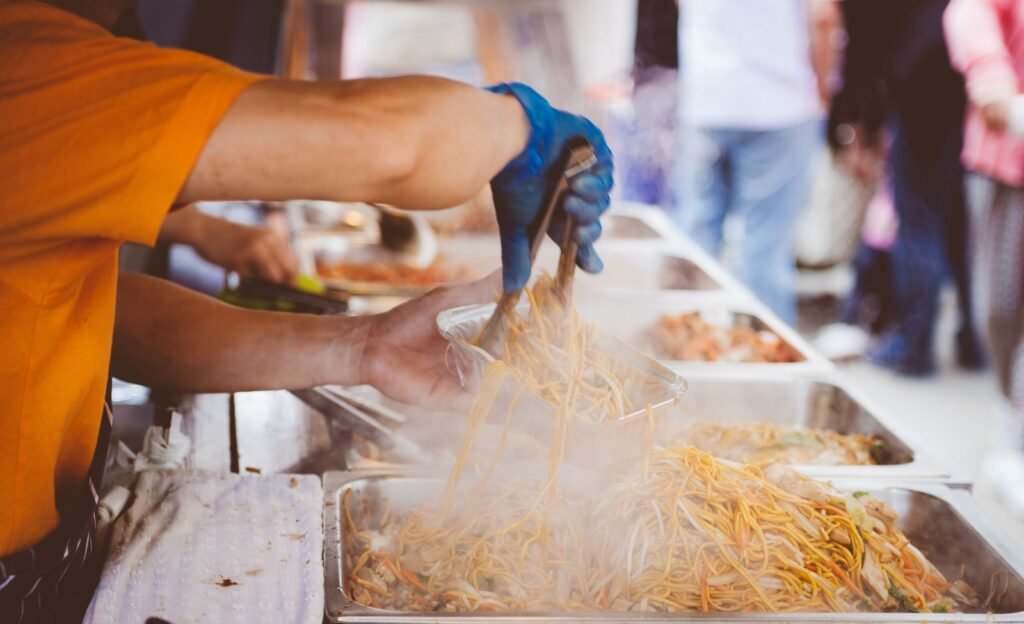
You’ll hear it most at hawker stalls and mamak places, where the whole transaction runs on it:
- “Boss, kira” — boss, the bill. Kira is “count” or “calculate.” This is how you ask to pay, and it saves you doing the international mime of scribbling on your palm like a lunatic.
- “Boss —” followed by whatever you want. It’s the excuse me. It opens the sentence.
That’s it. That’s the whole course. There’s no accent to get right, no tone to worry about, and nobody is going to correct you.
There is more Malay worth learning than that, obviously, and there are other forms of address you’ll hear constantly. I’m not going to list them here and pretend I’ve mastered them, because I haven’t, and a bloke from London confidently teaching you Malay after a couple of years is exactly the sort of blog post I started this site to avoid.
The hand
There’s a second half to it, and the second half is better.
I raise my hand. Every single time. Every day I have been in this country.
I do it to the security guards on my building, and they raise theirs back, always with a smile. It has never once been missed. Not once in years. I have had entire relationships in this country conducted at a distance of about fifteen feet with no words in them at all.
You could get sniffy about that and call it not a real friendship. I’d say try getting a stranger in a London block to look up from their phone.
The men on the door
The guards on my building work twelve-hour shifts. One of them works seven days a week, twelve hours a day. Read that again, and then think about your own week, and how you described it as “mental” on Friday.
Their English is limited. Mine is Cockney, which is arguably worse. We manage.
Here’s what they do, and I want to be precise about it because it’s the part that gets left out of every “living in KL” article ever written:
- If you’re carrying shopping, they walk you to the lift and call it for you.
- They already know your floor. They press the button before you say anything. They just know.
- They stop you having to put your bags down, which sounds like nothing until you’ve done it in eighty per cent humidity.
- They ask what you’re up to. Where you’re going. How you are.
One of them is from Nepal. Lovely bloke. I’m still working out how to say his name properly, which I mention because it’s embarrassing and true, and I’d rather write that than pretend otherwise.
Nepal, for anyone whose geography is where mine was: it’s its own country. Not part of India. It sits between India and China along the Himalayas — Everest is on the Nepal–China border — with its own government, Nepali as its official language and its capital at Kathmandu. Nepalis form a substantial part of Malaysia’s migrant-worker community, particularly in security and manufacturing.
They probably see more of me than they do their own families. I think about that a fair bit.
The taxi driver, and the reason I’m not laughing
A driver asked me once where I was from. London, I said.
He’d heard of New York. So he asked me, perfectly reasonably as far as he was concerned:
“How far is that from New York?”
Long flight, I said. Several hours.
“How long would it take you to drive?”
Now. You can tell that story two ways.
You can tell it the way most people would, where the punchline is a man who doesn’t know the Atlantic Ocean is there, and everyone at home has a little chuckle about it.
Or you can tell it honestly, which is this: he’s not being daft. To him it’s all one big place over there, the western world where the white people live, and he’s not being any more ignorant than I was about him.
Because back in England, hand on heart, I could not have told you the difference between Malaysia, Thailand, Japan and China. Not really. Not beyond what I’d seen in films. I’d have lumped four thousand miles and about a dozen unrelated cultures into one word — “Asia” — and thought nothing of it, and if a Malaysian had laughed at me for it I’d have deserved it.
Two blokes in a car with exactly the same blind spot, pointing in opposite directions. He asked out loud. I never did.
He also, incidentally, called me boss.
What I’m actually saying
Every article about moving abroad tells you to prepare. Learn the language. Study the etiquette. Read the forums. Arrive as a fully-formed international citizen with a phrasebook and a plan.
I arrived with none of it, and the thing that has done more for my day-to-day life here than any preparation I could have done was a word my dad used to say. I hear it now and I think of him.
Alright, boss.