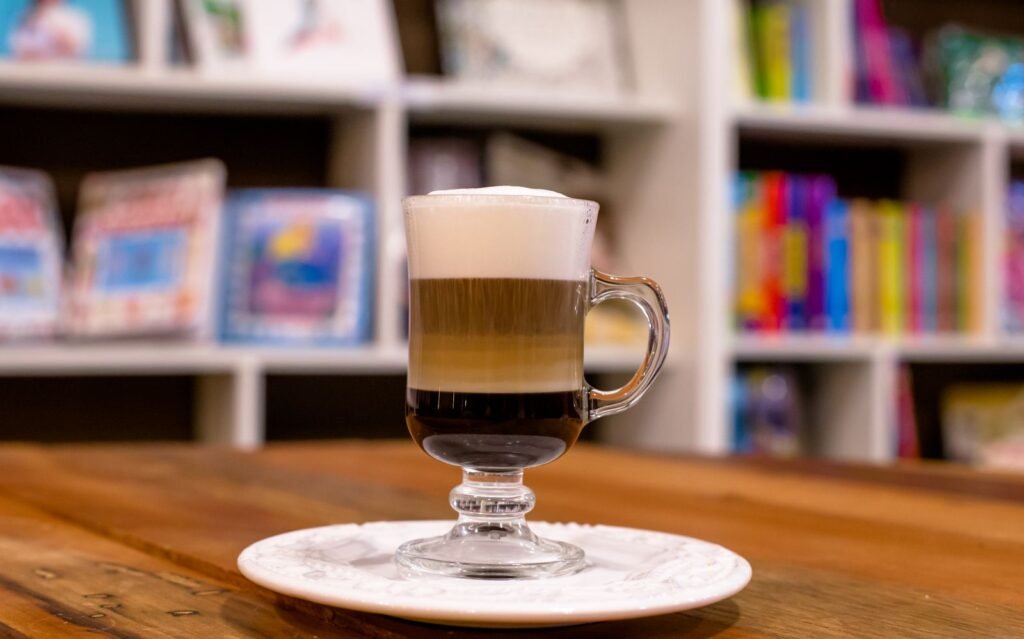
There is a coffee shop here called Koppiku, and they do a rose latte that I have thought about more than I would like to admit.
It arrives in a tall glass in three stripes. Deep pink at the bottom, a band of white through the middle, coffee brown sitting on top. Then you stir it and ruin the whole thing, and it is worth it.
I asked the girl behind the counter how they made it. She wrote it down for me on a bit of paper. She was, in fairness to her, extremely vague — the sort of instructions that assume you already know, which is the way anybody explains a thing they make forty times a day.
So my first go was wrong. I made it with ordinary milk, filmed it, put it on TikTok, and thought I had cracked it. I had not cracked it. It was fine. It was not the drink.
What I was missing is the thing that makes almost every Malaysian coffee taste like a Malaysian coffee, and it took me an embarrassingly long time to work out.
It is three milks, not one
That is the whole secret. Back home, milk is milk. You have the blue one or the green one and there ends the conversation. Here, a proper kopi uses more than one kind of milk at once, and they are doing different jobs.
- Two parts fresh cow’s milk — the body of it
- One part evaporated milk — this is the one I was missing. It gives it that faintly cooked, rounded taste you cannot get any other way.
- One part condensed milk — the sweetness, and the weight that makes it sit at the bottom
Get those proportions right and you are most of the way there. Get them wrong and you have made a milkshake.
The rest of it
Rose cordial. The local stuff, from the village grocer, in the big plastic bottle. Not an imported barista syrup with a pump on the top costing four times as much. The cheap one is the correct one. This is the ingredient a British reader will not have in the house and will have to go and find, and it is the whole point of the drink.
Ice. Plenty. This is not a drink that survives being lukewarm.
A shot of coffee, poured last. Straight from the pot, over the back of a spoon if you are feeling like a show-off.
How to build it
- Rose cordial into the bottom of a tall glass.
- Condensed milk on top of that. Do not stir. Stirring is later, and stirring is the enemy for now.
- Fill the glass with ice.
- Pour the cow’s milk and evaporated milk over the ice — two parts to one.
- Float the coffee on top last.
It layers itself. You do not have to be clever about it. The cordial and the condensed milk are heavier than everything else, so they stay put, and the coffee is lighter, so it sits on the surface looking like you know what you are doing.
Why it works, and why it would not work hot
Rose in a hot coffee would be horrible. I am fairly confident of that without needing to try it. Warm floral things taste like soap and regret.
Cold changes it completely. Cold flattens the perfume and leaves the flavour, which is why this whole family of drinks — the rose one, the coconut one, the buttercream one, the banana Spanish latte that sounds like a dare and is actually magnificent — only exists over ice.
Britain has hazelnut and vanilla in hot coffee and considers the matter closed. There is an entire world of this stuff out here and most people at home have no idea it is going on.
If you would rather someone else made it
Go to Koppiku and order it. It is better than mine, they have been doing it longer, and you do not have to buy a bottle of rose cordial you will then have to find eleven other uses for.
But if you are reading this in Britain in February, and it is dark at four, and you fancy knowing what a Tuesday afternoon tastes like out here — three milks, some rose, some ice, and a shot of coffee on the top.
Proportions are how I make it, not a laboratory measurement. Adjust the condensed milk to taste, and be aware that “to taste” in Malaysia means considerably more than it does at home.