Disclosure: This article may contain affiliate links. If you book or buy through one, I may earn a commission at no extra cost to you. I only recommend options I believe are genuinely useful.
I didn’t come to KL as a photographer. I came with a laptop and a remote work contract and a vague plan to figure out Southeast Asia. But something happened about six weeks in — I started noticing how photogenic this city is. The way the Petronas Towers emerge from low cloud in the morning. The stacked layers of shophouse facades in Petaling Street. The riot of colour and steam at a night market. KL kept stopping me to take pictures, and eventually I started going out specifically to find them.
This guide is what I wish I’d had in those early months: the best photography locations in KL, from the obvious landmarks to the hidden gems, plus practical information about the best times to shoot and how to get there.
Iconic KL: The Spots Everyone Knows
Petronas Twin Towers from KLCC Park
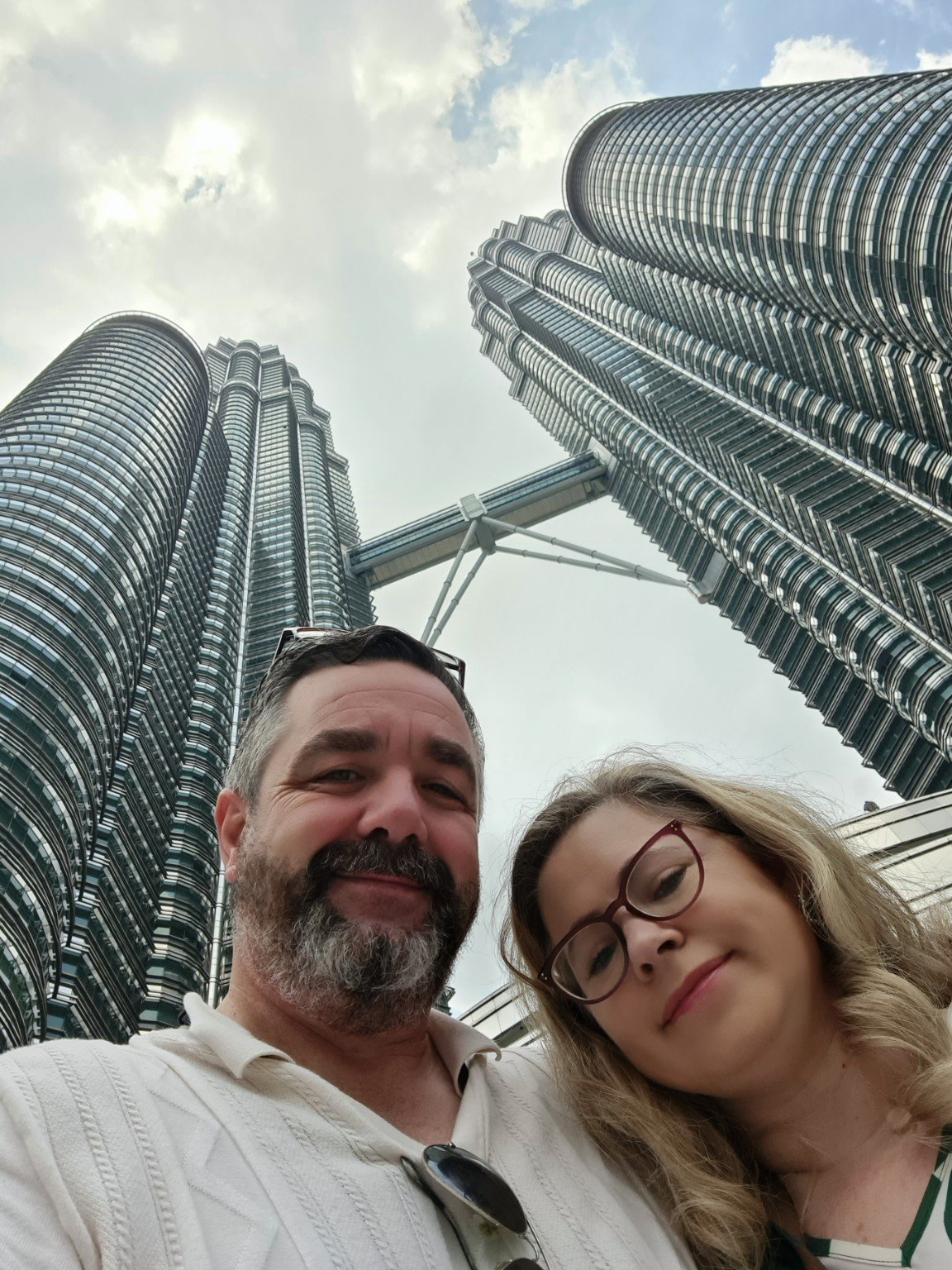
You can’t avoid photographing the Petronas Towers — they’re the defining image of KL — but you can do it well or badly. The best foreground for the towers is the lake and fountains in KLCC Park, which gives you a mirror reflection shot when the water is still and the light is golden. Aim for the hour after sunrise (roughly 7–8am) or the blue hour just after sunset (around 7:15–7:45pm). The towers are illuminated at night, and a long exposure with the lit towers reflected in the lake is genuinely spectacular.
The park opens at 7am. Come before 7:30am on weekdays to beat the crowds. On weekends it fills up fast. There’s a specific spot near the main fountain at the north end of the park that gives you a centred, symmetrical shot — look for the tripods, because photographers know it.
KL Tower (Menara KL) Observation Deck
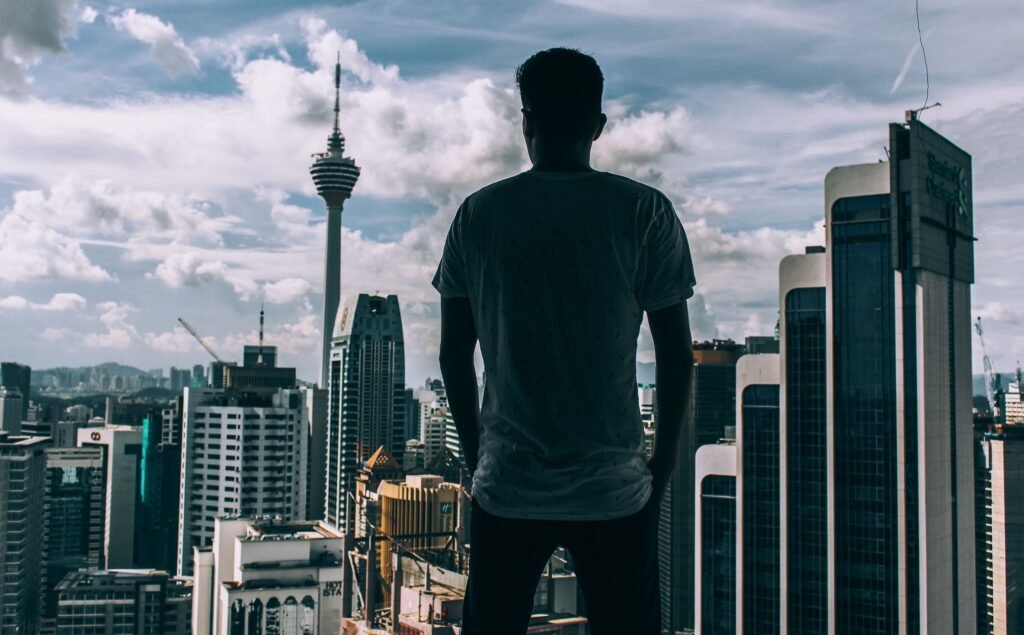
For an aerial view of the city, KL Tower beats the Petronas Towers’ Skybridge in one specific way: you can photograph the Petronas Towers from it. The observation deck at KL Tower sits at 276 metres and gives a 360-degree panoramic view. The towers dominate the eastern view, surrounded by the KL skyline. Visit just before sunset, when you get the warm light on the towers followed by the blue hour. Ticket prices and deck access can change, so check the official KL Tower website before visiting.
The open-air Sky Deck has no glass between you and the view, which makes a significant difference for photography when it is open. Check current access and weather conditions before you go.
Batu Caves
About 13km north of central KL, Batu Caves is one of Malaysia’s most iconic images — the golden Murugan statue (the world’s tallest Lord Murugan statue at 42.7 metres), the rainbow-painted staircase, and the dramatic limestone cliffs with a cave temple at the top. For photography:
Arrive at dawn. The soft morning light on the gold statue before the crowds arrive gives you something genuinely beautiful. By 9am it’s extremely busy and your photos will be full of people. By 7am you’ll have relatively clear shots.
Thaipusam (usually January/February) transforms Batu Caves into something extraordinary — one of Asia’s most dramatic festivals, with hundreds of thousands of devotees, kavadi carriers with body piercings, and a colour and scale that’s overwhelming. If you’re in KL during Thaipusam and you’re a photographer, this is unmissable.
Sri Mahamariamman Temple (Jalan Tun H.S. Lee, Chinatown)
One of KL’s most ornate Hindu temples, on Jalan Tun H.S. Lee beside Chinatown. The gopuram (tower gate) is extraordinarily detailed — hundreds of hand-painted figures in vivid colours. Photograph it from across the street for the full facade in the afternoon when the light hits it frontally. Entry is free; respectful dress is required (covered shoulders and knees).
Street Photography: KL’s Best Urban Texture
Petaling Street (Chinatown)
The historic heart of KL’s Chinatown is a gift for street photographers. The red lanterns strung across the street, the old shophouse facades, the vendors, the temple doors, the old men playing chess in the covered walkways — there’s texture everywhere. Early morning (7–9am) is when you’ll find the market being set up, deliveries being made, and the light streaming through the lanterns before the crowd arrives. By 10am it’s busy; by noon it’s hectic.
Go beyond the main covered section: the streets around Jalan Sultan and Jalan Tun H.S. Lee have beautiful old shophouses and some genuinely photogenic covered five-foot walkways in varying states of attractive decay.
Little India (Jalan Masjid India / Brickfields)
Two distinct Little India districts worth visiting. Jalan Masjid India in the city centre is a street market-meets-permanent bazaar with saree shops, flower garlands, and street food vendors. Brickfields near KL Sentral is denser, more residential, and arguably more photogenic — especially the area around the Sri Mahamariamman temple and the small alleyways behind the main street.
The colours in both areas are exceptional. The flower garland stalls near Masjid India station are best photographed in the morning when stock is fresh and light is good. The warm tones of saffron and gold look beautiful in late afternoon light.
Chow Kit Market
One of the most underrated photography locations in KL. The Chow Kit wet market is a sensory overload — fresh fish, tropical fruits, meat vendors, piles of spices, and a cast of characters you won’t find anywhere else in the city. Early morning (6–9am) is when it’s at its most photogenic and lively. Bring a fast lens; the covered market is dim. A 35mm f/1.8 or 50mm f/1.4 is ideal.
Ask permission before pointing a camera directly at someone’s face. Most vendors don’t mind candid shots of their produce or the general market scene, but direct portraiture requires a nod and a smile first.
Kampung Baru
A traditional Malay village that somehow survived right in the middle of the city — surrounded by skyscrapers but preserving wooden stilt houses, a central mosque, and a slower pace of life. The contrast between the traditional architecture and the glass towers looming in the background makes for striking juxtapositions. Best photographed from within the village streets rather than from the main road, and best at golden hour when the light goes warm and the tower lights start to come on.
Street Art and Murals
Bangsar
The trendy Bangsar neighbourhood has a growing collection of murals, particularly around Jalan Telawi. Some are Instagram-famous; others are tucked into alleyways. Walk the streets between Bangsar Village and the wet market for the best selection. The area around Jalan Abdullah also has some excellent wall art.
Chow Kit and Titiwangsa
Several large-scale murals have appeared in the streets around Chow Kit and Titiwangsa in recent years, part of various urban art initiatives. They change over time as new ones are commissioned and older ones fade, so it’s worth a wander with Google Maps to see what’s current.
Publika Mall (Solaris Dutamas)
The arts-focused Publika mall in Dutamas has rotating art installations and permanent murals throughout its outdoor areas. The surrounding neighbourhood (Solaris) also has interesting street art. Good for an afternoon wander combined with the farmers market on Sundays.
Views and Rooftops
Heli Lounge Bar
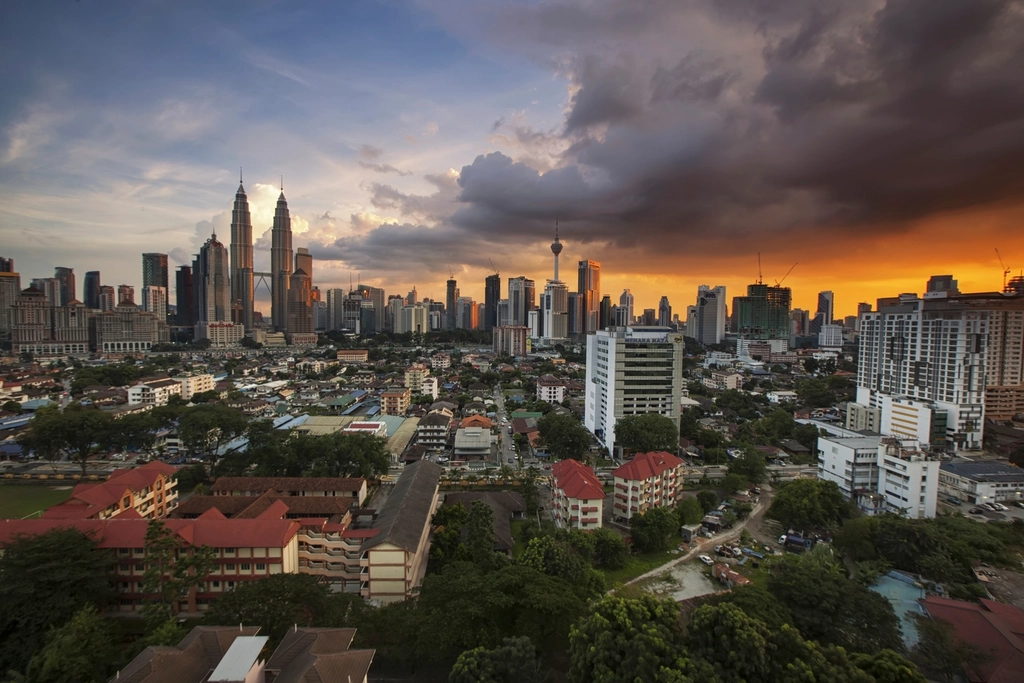
A rooftop bar on the 34th floor of a building in the Golden Triangle area, with open-air 360-degree views. It’s a working bar, so you’ll need to order a drink, but the view of the KL skyline is excellent and genuinely feels like you’re floating above the city. Best at sunset when the drinks are cold and the sky turns amber behind the towers.
SkyBar at Traders Hotel
The SkyBar looks directly across at the Petronas Towers from the 33rd floor of Traders Hotel in KLCC. For photographing the towers up close and level, it’s hard to beat. Again, minimum spend applies, but a beer and a towers-at-sunset shot is a fair trade. Arrive just before sunset to secure a window position.
Nu Sentral Rooftop Carpark (Free)
A free alternative view: the rooftop carpark at Nu Sentral mall in KL Sentral gives an unobstructed view towards the city centre and on a clear day you can see the KL Tower and the Petronas Towers in the distance. Not as dramatic as the paid options but completely free and accessible.
Around Kuala Lumpur: Day Trip Photo Locations
Firefly Tour (Kuala Selangor)
About 60km from KL, the firefly sanctuary along the Selangor River is one of Malaysia’s most magical natural experiences. Hundreds of thousands of fireflies (kelip-kelip) light up the mangrove trees along the riverbank after dark, blinking in coordinated patterns. It looks extraordinary to the naked eye but is incredibly hard to photograph — you need a tripod, wide aperture, and 10–30 second exposures. Worth attempting even if the results are imperfect. The experience alone justifies the trip.
Sunflower Farm / Blue Lotus Farm (Sabak Bernam / Fraser’s Hill)
Malaysia’s highland areas and some valleys north of KL have seasonal flower farms that become popular photo destinations when in bloom. The blue lotus pond at Ladang Bunga Matahari near Sabak Bernam (roughly 90 minutes from KL) and the various highland gardens around Fraser’s Hill are worth the drive if you enjoy floral photography.
Photography Practical Notes
Best light times: KL’s light is tropical — harsh and direct from around 9am to 4pm. The golden hour is roughly 6:30–7:30am and 6–7pm. Blue hour follows sunset from about 7–7:45pm. Plan your visits to key spots for these windows.
Weather: KL can rain suddenly and dramatically. Keep a small dry bag for your camera gear, or be prepared to duck into a coffee shop quickly. Rain also creates interesting conditions — steaming pavements, reflections in puddles, empty streets. Some of my favourite KL photos were taken just after a downpour.
Gear: A mirrorless or DSLR with a 24–70mm equivalent is the most versatile choice. For street photography, a compact 35mm prime is less intimidating and more candid. A tripod is essential for night shots of the towers and fireflies.
Drone rules: Drone photography in KL is heavily regulated. You need approval from the Civil Aviation Authority of Malaysia (CAAM) and local permissions for almost any urban shoot. The Petronas Towers and airport vicinity are completely off-limits. Check current regulations carefully before flying — fines are significant.
KL rewards the photographer who is willing to go beyond the obvious. The towers are beautiful, yes, but the soul of this city is in its markets and temples and alleyways and the faces of the people who have lived here for generations. Get up early, eat at a kopitiam, and see where the morning light takes you. That’s usually where the best pictures are.
NordVPN — protect your devices while editing and uploading
SafetyWing — nomad health insurance for photographers on the road
Agoda — great hotel deals across KL’s neighbourhoods