Batu Caves is the single most visited attraction in Malaysia, and it’s 20 minutes from central KL on the commuter train.
Prices checked August 2026. Everything here is what I actually paid or was actually quoted, in ringgit, in Kuala Lumpur. Malaysia moves fast — check before you commit to anything.
If you’re visiting KL — or living here — you’re going to Batu Caves. The question is whether you arrive knowing what to expect, or spend the first 20 minutes figuring it out in the heat. This guide covers everything: how to get there, what you’ll see, how long it takes, what the 272 steps are actually like, and what to do if you have limited mobility or small children.
What Is Batu Caves?
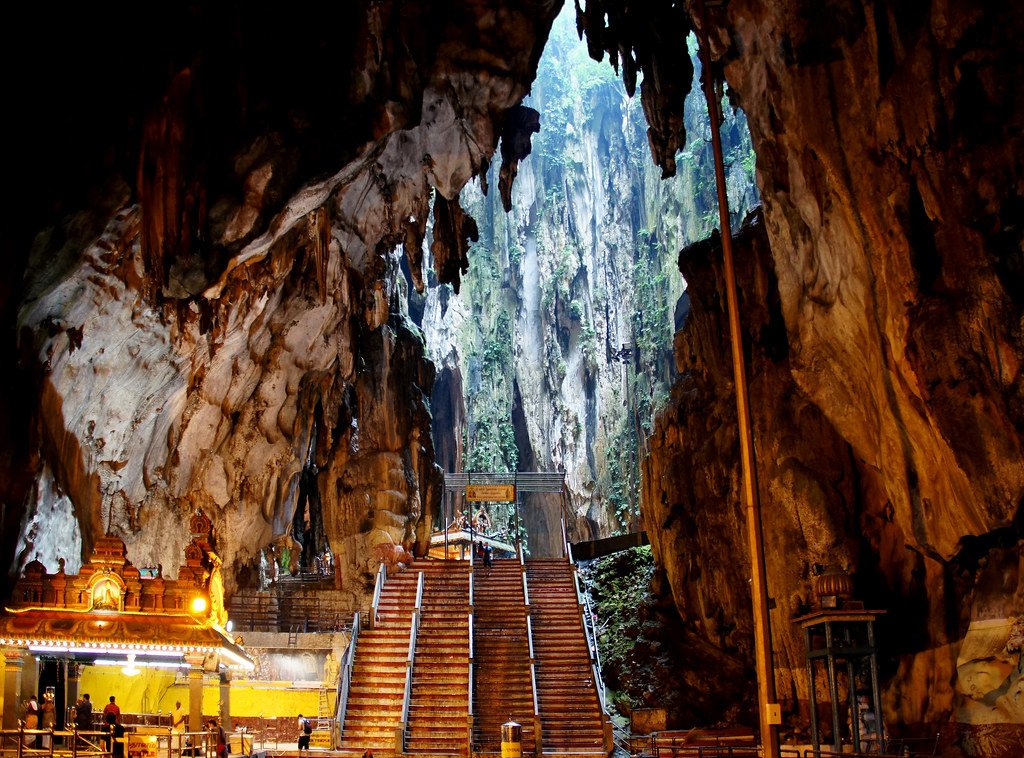
Batu Caves is a series of limestone caves and cave temples set inside a 400-million-year-old limestone hill, located in Gombak, about 13km north of central KL. The main site — Cathedral Cave — sits at the top of 272 painted rainbow-coloured steps and contains several Hindu shrines and temples. At the base of the steps stands a 42.7-metre golden statue of Lord Murugan, the second-largest statue of its kind in the world.
The site is sacred to Hindus and is the focal point of Thaipusam, one of the largest Hindu festivals in the world, held annually in January or February. During Thaipusam, over a million people gather here. On a regular day, you’re looking at thousands of visitors.
How to Get to Batu Caves
By KTM Commuter Train (Recommended)
The easiest and cheapest way. Take the KTM Komuter on the Rawang–Seremban line to Batu Caves station. The station is a 5-minute walk from the main entrance.
From KL Sentral: about 35 minutes, RM 2.60 each way. Trains run every 15–30 minutes. Check the MyRapid app or Moovit for departure times. The train from KL Sentral departs from the underground Komuter section — follow signs for “Komuter” rather than MRT or LRT.
From KLCC: Take the LRT to KL Sentral, then switch to the KTM Komuter. Journey time: 45–50 minutes total.
By Grab (Ride-Hailing)
From KLCC: 20–30 minutes (traffic dependent), RM 18–30. Convenient if you’re going first thing in the morning before traffic builds. Return Grab can be harder to get mid-morning when demand is high — you may wait 10–15 minutes. The train is more reliable for the return.
By Taxi
Airport taxis and metered taxis serve the route. Similar pricing and timing to Grab. Pre-book via app for fixed pricing.
By Car
Take the DUKE highway north, then follow signs to Batu Caves. Paid parking on-site. Can be slow on weekends — arrive before 9am or after 3pm.
Opening Hours and Entry
Cathedral Cave (the main cave at the top of the 272 steps): Open 8am–9pm daily. The cave itself is free to enter — there’s no ticket required for the main cave. Some temple areas inside have donation boxes.
Art Gallery Cave and Museum Cave: Small entrance fees (RM 5–10), separate from the main cave.
Best time to visit: 8–9am for cooler temperatures and thinner crowds. Avoid 10am–2pm on weekends — it’s hot, crowded, and the queue at the base of the steps can be significant. Weekday mornings are the sweet spot.
The 272 Steps
Yes, you have to climb them. There’s no lift or alternative route to Cathedral Cave.
The steps are steep — not cliff-face vertical, but properly steep in sections. The full climb takes most adults 10–15 minutes at a moderate pace. The steps have been repainted in a rainbow gradient (a renovation completed in 2018), which makes them one of the most photographed staircases in Asia.
The handrails are solid. Most people in reasonable fitness manage them fine, including older visitors. Children do climb them — plenty of families go — but you’ll be carrying very small children up yourself. Prams are not possible on the steps. Baby carriers work well.
Coming down is usually quicker but knees will know about it if you’re not used to stairs. Take your time on the descent.
Important: wear shoes with grip. The steps can be slippery from rain or cleaning. Flip flops are a risk.
The Monkeys
Batu Caves has a significant population of long-tailed macaques. They’re entertaining from a distance and problematic up close.
Do not: eat food openly at the base or on the steps. The monkeys will approach, grab, or in some cases snatch food (and bags that smell like food) with remarkable boldness. This is not a risk, it’s a near-certainty if you’re eating in the open.
Do: keep bags zipped, sunglasses in a pocket (monkeys will take them), and water bottles held rather than dangling from a bag strap. Don’t make eye contact and try to feed them — it’s discouraged and makes the behaviour worse.
The monkeys won’t attack unprovoked, but they’re not shy. They’re a feature of the experience, not a reason to stay away — just know what you’re walking into.
What’s Inside Cathedral Cave
At the top of the steps, you enter a large cathedral-like cavern — the name is apt. The cave is genuinely impressive: enormous ceilings, natural light streaming through openings, and the scale is surprising even if you’ve seen photos.
Inside are several Hindu shrines and temples. The main one is dedicated to Lord Murugan. Worshippers come here daily; this is an active place of worship, not just a tourist attraction. Dress modestly — shoulders and knees covered. Sarongs are available to borrow or buy at the entrance if needed.
Walk through the cave and out the other side — there’s a section that opens out to views and additional small shrines. The full cave walk takes 20–30 minutes, longer if you pause at the shrines or wait for photos.
Other Caves at the Site
Art Gallery Cave (Ramayana Cave)
A separate cave at ground level, to the right of the main steps as you face them. This one is decorated with colourful 3D murals depicting scenes from Hindu epics. More theatrical than sacred. Small entrance fee. Worth a visit if you have time — it’s visually striking and less crowded than Cathedral Cave.
Museum Cave
Small cave housing religious artefacts and displays. Less visited, good if you’re interested in learning more about the Hindu traditions connected to the site.
Dark Cave
For the adventurous: a guided tour into a cave system that hasn’t been developed for tourists. Bats, cave spiders, and near-total darkness. Not for the claustrophobic, excellent for anyone who wants something different. Book in advance at darkcavemalaysia.com.
The Temple Complex at the Base
Before climbing the steps, spend time at the base. The Sri Subramaniam Temple complex is elaborate and colourful — towers covered in thousands of sculpted figures, brightly painted and maintained. The gopuram (tower) at the entrance is worth photographing. The Murugan statue is at its most impressive from ground level — 42.7 metres is genuinely massive.
Thaipusam — If You Visit in January/February
Thaipusam is when Batu Caves becomes one of the most extraordinary spectacles in Southeast Asia. Devotees carry kavadis — elaborate metal structures attached to their skin with hooks and skewers — up the 272 steps as an act of devotion. The procession, the music, the scale of the crowd, and the visible faith of participants makes it one of the most powerful things you’ll see anywhere.
If you’re in KL during Thaipusam (check the date — it moves each year, usually January or February), go. Be aware it is extremely crowded. Arrive very early (4–6am) or go late evening. Photography is generally permitted but be respectful.
How Long Should You Spend?
Two to three hours is the right amount for a first visit: explore the base, climb the steps, walk through Cathedral Cave, visit the Art Gallery Cave. If you’re spending less than 90 minutes, you’ll feel rushed. If you have four hours, add the Dark Cave tour.
Eating Near Batu Caves
There are stalls and small restaurants at the base selling roti canai, nasi lemak, Indian vegetarian food, coconut water, and snacks. Quality is decent, prices are low (RM 5–10 per person). Don’t bring your own food onto the site itself — see monkey section above.
For a proper meal, Batu Caves town (a 10-minute walk or short Grab) has a good selection of banana-leaf Indian restaurants and hawker food.
Tips for First-Timers
- Go early. 8am start means you beat the heat and the tour buses. Arrive to near-silence and a cathedral cave to yourself.
- Wear grippy shoes. Not flip flops. The steps reward footwear with traction.
- Cover up. The caves are an active Hindu temple. Respectful dress (no short shorts, shoulders covered) is expected. Sarongs available to borrow.
- Bring water. Especially in the middle of the day. Buy coconuts at the base rather than walking dehydrated up 272 steps.
- The train is fine. It’s the same commuter rail system used by locals daily. Safe, cheap, straightforward.
- Take photos from the bottom for the full Murugan statue. You can’t see it from the steps once you’re on them — the best view is at ground level, about 50 metres back.
Related Reading
🏨 Staying Near Batu Caves or in KL?
Agoda
Best hotel prices in KL and across Malaysia. Strong Asian inventory and last-minute deals.
Find HotelsBooking.com
Hotels, guesthouses, and apartments in KL. Free cancellation options available.
Search BookingWise
Spend in ringgit at the real exchange rate. Works at any Malaysian hotel, restaurant or attraction.
Get WiseSome links are affiliate links. I earn a small commission if you sign up at no extra cost to you. I only recommend things I actually use.
What Is Thaipusam?
Thaipusam is a Tamil Hindu festival celebrated during the Tamil month of Thai (January–February), on the full moon day. It honours Lord Murugan — the son of Shiva, the god of war and victory, depicted riding a peacock and carrying a vel (divine spear). The festival commemorates the occasion when the goddess Parvati gave Murugan a spear to defeat the demon Soorapadman.
Devotees who have made vows to Lord Murugan (for healing, answered prayers, or as acts of thanksgiving) fulfil those vows by carrying kavadi on this day. The kavadi ranges from simple offerings of milk (carried in a clay pot balanced on the head) to elaborate silver-and-peacock-feather structures weighing 30–40kg, attached to the body via metal skewers pierced through the cheeks, tongue, and torso.
The act of piercing and carrying kavadi is not considered to be about pain — devotees enter a state of religious trance, and many report feeling no pain during the process. Priests, family members, and fellow devotees chant and play drums to maintain the devotional state. The devotee often appears calm, even joyful, throughout.
Where Does Thaipusam Happen in Malaysia?
Thaipusam is celebrated at Tamil Hindu temples throughout Malaysia, but the Batu Caves celebration is the largest in the world outside India. Other significant celebrations happen in Penang (at Waterfall Hill Temple / Kovil Veedu, with its own procession and steps), in Ipoh (at Kallumalai temple), and at Sri Subramaniar Swamy Temple in Seremban.
The KL celebration begins with a procession from Sri Mahamariamman Temple in Chinatown (Jalan Bandar) — a silver chariot carrying the statue of Lord Murugan travels by night from the city temple to Batu Caves, pulled by devotees and accompanied by a vast procession of thousands. The chariot procession departs the evening before the main festival day and arrives at Batu Caves in the early hours of the morning.
What to Expect at Batu Caves
The scale is the first thing that hits you. The approach road to Batu Caves is lined for kilometres with stalls, vendors, music, chanting — a river of colour and sound. Devotees in yellow (Lord Murugan’s colour) carry kavadi of all sizes. Families accompany their relatives who have made vows. Drums beat continuously. The air smells of incense, jasmine garlands, and camphor.
The 272 steps are congested during peak hours — the main day sees the greatest crowds in the morning. Kavadi carriers ascend the stairs while drummers and family members accompany them, maintaining the trance state. At the top, in the main cave, priests receive the kavadi offerings and the devotees complete their vows.
On the main festival day (and the day before, during the chariot procession), the area around Batu Caves is at maximum capacity. The LRT/MRT is packed, the roads are gridlocked, and the crowd at the temple is enormous. This is not a reason to avoid it — it is exactly the experience — but it does require planning.
Practical Guide: When and How to Visit
When to Go
The festival runs for three days. The most dramatic events:
Night of Day 1 (chariot procession): The silver chariot departs Sri Mahamariamman Temple in Chinatown after 8pm and arrives at Batu Caves in the early hours. If you want to see the procession itself (which passes through the streets of KL en route to Batu Caves), position yourself along Jalan Pudu or the route to Ampang. The streets are lined with crowds and the atmosphere is electric.
Main festival day (Day 2): This is the main kavadi day. The most intense crowds are from 6am–2pm. Going very early (before 6am) or in the afternoon gives a slightly less crushing crowd experience. Night-time visits on the main day have a different, magical quality — the cave is lit, the crowd has thinned slightly, and the devotional atmosphere continues.
Day 3: The return procession brings the deity back to the city temple. Smaller crowds, still atmospheric.
How to Get There
Take the MRT to Batu Caves station (the Putrajaya Line / Batu Caves branch). Do not attempt to drive — parking is impossible on festival days, and the roads are closed or gridlocked for hours in each direction. Trains run extended hours during Thaipusam. Expect extremely packed trains going to Batu Caves in the morning and returning in the afternoon — be patient and persistent.
The walk from Batu Caves MRT station to the temple steps is about 10 minutes, through the vendor stalls and festival area. You won’t be able to miss it — just follow the flow of yellow.
What to Wear
Wear modest, comfortable clothing you don’t mind getting very hot and sweaty. Remove shoes before entering the cave area (shoe storage is provided at the base of the steps). Yellow is the festival colour — wearing yellow is welcomed but not required. Closed-toe shoes (or sandals with straps) are better than flip-flops for the steps.
Photography
Photography of the festival, the procession, the kavadi carriers, and the crowds is generally accepted and even welcomed — many devotees and their families are proud of the ceremony and happy to be photographed. However:
Be sensitive when photographing the piercing ceremony itself. Ask permission where possible. Don’t use flash close to devotees in trance states. Give priority of movement to kavadi carriers and their entourages on the steps. Don’t block pathways to get a shot.
For photography, the chariot procession in the streets of KL at night offers dramatic shots without the extreme crowd density of the cave itself. The steps are also spectacular — kavadi carriers ascending in the golden morning light, drummers alongside them, is one of the great visual spectacles of Southeast Asia.
What Dates Is Thaipusam in 2025 and 2026?
Thaipusam falls on the full moon in the Tamil month of Thai. Recent and upcoming dates:
2025: 11 February (main festival day). Public holiday in Kuala Lumpur and Selangor.
2026: 31 January (main festival day). Public holiday in Kuala Lumpur and Selangor.
2027: 20 January.
Note: Thaipusam is a public holiday in KL and Selangor but not all Malaysian states. If you’re travelling from another state to see it, it’s a normal working day there.
Is It Safe and Respectful to Attend as a Non-Hindu Visitor?
Yes, completely. Thaipusam at Batu Caves is attended by thousands of non-Hindu visitors each year — tourists, expats, local Malaysians of all ethnicities and religions — and visitors are genuinely welcomed. The Hindu community takes pride in sharing this celebration.
The main courtesies: remove shoes, dress modestly, give way to kavadi carriers, be respectful of active worship, ask before photographing people closely. Beyond that, you’re free to observe, explore, and experience everything the festival offers.
The experience is loud, crowded, hot, and extraordinary. Go with a spirit of open curiosity and you’ll find it one of the most memorable days of your time in Malaysia.
Plan Your Malaysia Trip
Managing money between the UK and Malaysia is much easier with Wise — real exchange rates, low fees, and a multi-currency account you can top up and spend from anywhere.
Get Wise →If you’re visiting Malaysia for Thaipusam or living here as an expat, SafetyWing’s Nomad Insurance gives you affordable travel health cover that works across Southeast Asia.
Get SafetyWing →For festival visits, book accommodation in KL’s city centre — easy MRT access to Batu Caves, and close to the chariot procession route through Chinatown. Agoda has great KL deals.
Find KL Hotels →Some links are affiliate links. I earn a small commission if you sign up at no extra cost to you. I only recommend things I actually use.