Some links here are affiliate links. If you book through one I get a small commission and you pay exactly the same. I only link to things I’d tell a mate to use.
Prices checked August 2026. Everything here is what I actually paid or was actually quoted, in ringgit, in Kuala Lumpur. Malaysia moves fast — check before you commit to anything.
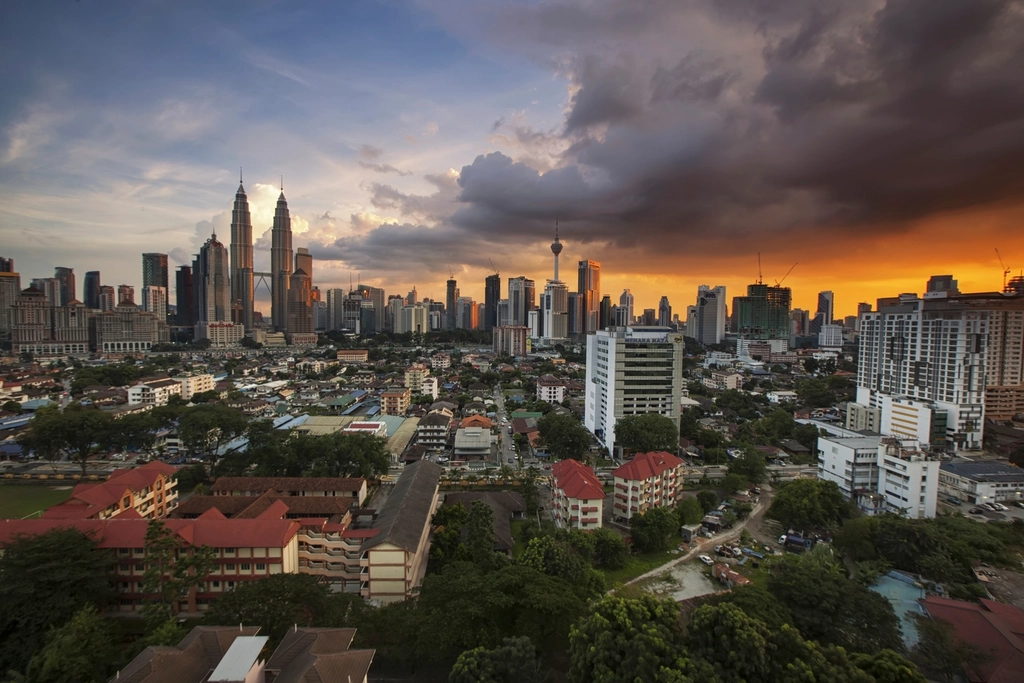
The first day trip I took out of Kuala Lumpur, I got on the wrong train, ended up in Rawang, and had a very pleasant hour looking at a car park. Nobody writes that one up as a hidden gem. But it did teach me the thing this whole post rests on: KL is astonishingly well placed, and the difference between a good weekend and a wasted Saturday is almost entirely about knowing how long the journey actually takes.
That last bit matters more than it sounds. Every listicle on the internet will tell you Cameron Highlands is “just a short drive”. It is not. It’s the better part of four hours up a road with the corner radius of a corkscrew, and if you attempt it as a day trip you will spend roughly eighty minutes at your destination and the rest of your life regretting it.
So this guide is organised by how long it genuinely takes to get there, not by how long a tourism board wishes it took.
Under an hour from KL
Batu Caves
Distance: 13km north of the city centre
Travel time: about 30–40 minutes on the KTM Komuter (Batu Caves line), or 20–30 by Grab
Cost: RM2.60 each way on the train — correct at time of writing
Two pounds sixty in ringgit, door to door, to stand at the bottom of a 100-metre limestone cliff with a gold statue of Lord Murugan in front of it. The London Underground charges more than that to go three stops and see a man eating a Ginsters.
There are 272 steps up to the main Temple Cave, and they’ve been painted in colours that look tremendous in photographs and quite alarming in person. The caves themselves are hundreds of millions of years old. The monkeys are not remotely afraid of you and will take food straight out of your hand, which is funny exactly once.
Go before 9am. Not for the crowds — although yes, the crowds — but because by eleven you are climbing 272 steps in equatorial heat, and I have watched grown men who ran the London Marathon sit down halfway up and quietly reconsider their lives. Entry to the main cave is free; some of the inner sections charge a small fee.
If you’re in Malaysia in January or February, Thaipusam at Batu Caves is the single most extraordinary thing I’ve seen since moving here. Hundreds of thousands of devotees, a dawn procession, kavadi carried up those steps. Go once and you’ll not forget it.
FRIM — and yes, this bit has changed
Distance: 16km northwest of KL, in Kepong
Travel time: 30–40 minutes by Grab
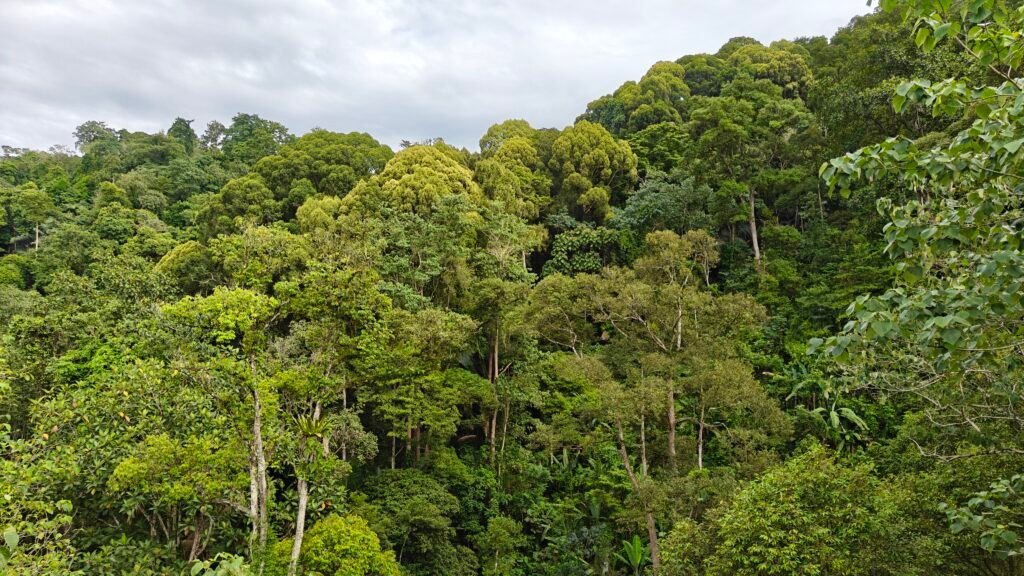
The Forest Research Institute Malaysia sounds like somewhere you’d be sent on a corporate away day. It is in fact 545 hectares of tropical forest that was, a century ago, a wrecked tin mine. They started replanting it in the 1920s. It worked so well that in July 2025 UNESCO put it on the World Heritage List — Malaysia’s sixth site, and the first anywhere recognised for restoring a tropical forest rather than for having one already.
A forest so convincing that the UN had to check it wasn’t real. That’s a decent day out.
Important, because most guides still get this wrong: the famous FRIM canopy walkway has been shut since 2017. Storm damage, safety, and the trees holding it up needed a rest. It is not reopening. If you’ve read elsewhere that you can walk it, that guide hasn’t been updated in nine years — a category I’m not going to pretend this post has never belonged to.
What you can do instead is the Forest Skywalk at the neighbouring Kepong Botanic Gardens, which is newer, and open. Book ahead; it runs Saturday to Thursday and closes on Fridays. Otherwise FRIM is excellent for walking, birdwatching, and being reminded that a rainforest is essentially a very warm, very loud room.
Putrajaya
Distance: 25km south of KL
Travel time: 30–40 minutes by KLIA Transit or Grab
Malaysia’s administrative capital, purpose-built in the 1990s, and the strangest place on this list. Everything is enormous, symmetrical and immaculate. There are eight-lane boulevards with four cars on them. It has the specific eerie calm of a place designed entirely on a computer, which it more or less was.
The Putra Mosque is genuinely beautiful — rose-pink granite, sitting on a lake, and far better in the flesh than in photographs, which is rare. The Perdana Putra building housing the Prime Minister’s office looks like the headquarters of an organisation the hero infiltrates in the third act.
I expected to hate it. I didn’t. It’s worth half a day, and easily combined with Cyberjaya next door.
An hour or two from KL
Genting Highlands
Distance: 50km northeast
Travel time: about an hour by car or bus, then the Awana SkyWay cable car
A casino resort in the clouds, on the shoulder of Mount Ulu Kali at roughly 1,800 metres. It is not subtle. It is not tasteful. It is Blackpool, if Blackpool were in a cloud forest and had a functioning cable car.
That cable car is the best part, and I’ll defend that. You go up through mist into what is objectively a different climate — it’s usually fifteen degrees cooler up there, which after a fortnight in KL feels like a medical intervention.
The theme park is Genting SkyWorlds. It opened in February 2022. You’ll still find guides calling it “20th Century Fox World” — that name was dropped after a legal falling-out with Fox and Disney and the park never opened under it. If a site is still telling you to check whether Fox World has opened yet, close the tab.
If you fancy staying up there for the cool nights, there’s a decent spread of Genting hotels on Booking.com — and the resort ones sell out hard on weekends and school holidays.
Port Dickson
Distance: 90km south
Travel time: around 1.5 hours by car, or KTM to Seremban then a taxi
KL’s nearest beach, and I’m going to be honest with you in a way the tourism copy won’t: it’s fine. The sand is fine. The sea is calm and warm and a sort of milky brown. The seafood restaurants along the coast are actually very good.
It is not the Perhentians. It’s not trying to be. It’s where KL families go on a Sunday, and if what you want is to look at some sea and eat a plate of chilli crab without getting on a plane, it does that job perfectly well. Manage the expectations and you’ll have a nice time. Arrive expecting the Andaman and you’ll be writing a furious review by lunchtime.
Half a day’s travel — worth an overnight
Malacca (Melaka)
Distance: 150km south
Travel time: 2–2.5 hours by bus from TBS (Terminal Bersepadu Selatan) — roughly RM10–15, correct at time of writing
Note the terminal: southbound coaches go from TBS, not Pudu Sentral. Pudu now handles northbound and short-haul routes only. Turning up at the wrong one is a solid ninety minutes of your day gone, and I’d rather you learned that here than from me.
Malacca is a UNESCO World Heritage city and it has earned it. Five hundred years of people turning up and building things on top of each other — Portuguese fort, Dutch town hall, British administration, Chinese shophouses, Baba Nyonya culture — all packed into a historic centre small enough to walk across in twenty minutes.
The Baba Nyonya Heritage Museum is one of the best museums in the country. Jonker Street’s night market runs Friday and Saturday evenings and is excellent, provided you accept that you will be eating while being gently jostled by four hundred people.
A day trip works. An overnight works considerably better, because the coach parties leave around five and the town becomes a completely different, much quieter place about an hour later. That’s the Malacca worth seeing, and you can’t see it on a day return. Rooms in the old town go for very little on Booking.com and the heritage shophouse conversions are the ones to aim for.
Ipoh
Distance: 200km north
Travel time: 2–2.5 hours on the ETS, depending on the service
Malaysia’s most underrated city, and the easiest genuinely rewarding day trip on this list.
On fares — the old version of this post said “about RM35 return”, which was nonsense, and I’ve no idea where I got it. KTMB uses dynamic pricing now. The same seat is one price a month out and a considerably worse price the week before, and it varies by class as well: Platinum and Gold cost different amounts and take different times. Budget somewhere in the region of RM30–55 each way and book early through ktmb.com.my or the KTMB app. Correct at time of writing, and genuinely volatile.
Ipoh was the richest city in Malaysia when Perak’s tin was running, and it’s still full of the architecture that money built — art deco facades, colonial civic buildings, old coffeeshops that have not changed the menu or the furniture in fifty years. The Old Town is walkable from the station. The white coffee is the real thing here rather than the sachet version. The limestone cave temples, Perak Tong and Sam Poh Tong, are worth a stop on your way out.
The trains are clean, air-conditioned, punctual and cost less than a taxi from Heathrow to Hounslow. I still find this faintly unbelievable.
Cameron Highlands
Distance: 200km north
Travel time: 3.5–4.5 hours by car or bus. Not a day trip. Genuinely, not a day trip.
Buses: from Pudu Sentral or TBS, around RM20–35 each way, correct at time of writing
Malaysia’s most famous hill station, sitting between roughly 1,400 and 1,600 metres — Tanah Rata, the main town, is at 1,440m. It’s cool, misty, and covered in tea. The British established the estates and Boh is still going, and that hillside of tea rows is on approximately every postcard printed in this country.
What nobody tells you until you’ve lived through a KL summer is what cool air does to you psychologically. I got out of the car in Tanah Rata and stood there for a full minute doing nothing, like a man who’d found religion. It was about eighteen degrees. In Britain I’d have described that as “a bit nippy” and put a coat on. Here I nearly wept.
The strawberry farms are aggressively twee, the butterfly gardens are for children, and the trekking is the actual reason to go — proper mossy cloud forest, and Gunung Brinchang has a road most of the way up if you’d rather not earn the view.
The four-hour road is the whole argument for staying over. Book a night in Tanah Rata or Brinchang and the trip transforms from an endurance event into a proper break. Weekends and Malaysian school holidays fill up completely, so don’t leave it to the day.
Penang
Distance: 330km north
Travel time: 1 hour by air; 3.5–4.5 hours by ETS to Butterworth plus the ferry across; 4–5 hours by bus
The best destination you can reach from KL, and it isn’t especially close. Fly. AirAsia and Batik Air run the route constantly and if you book a few weeks out the fares are low enough that taking the bus to save money is a decision you’ll regret somewhere around hour three. I’ve deliberately not quoted a fare here because they move daily and any number I print will be wrong by the time you read it.
The train is a genuinely nice way to do it if you’ve got the time — 3.5 to 4.5 hours to Butterworth depending on the service, then the ferry over to Georgetown, which is a lovely twenty minutes and costs almost nothing.
Georgetown is a UNESCO World Heritage Site and the food is the reason to go. Not the architecture, which is superb, and not the street art trail, which is fun. The food. The char kway teow is different from KL’s. The assam laksa is unlike anything else in the country, and the first time I had it I made a noise in public that I’m not proud of. You can eat for two days without repeating a dish and without spending twenty quid.
Penang Hill — funicular, cool air, views over the whole island — is worth a morning. So are the clan jetties.
Do not attempt this as a day trip. Two nights minimum. Georgetown’s restored shophouse hotels are on Booking.com and staying inside the heritage zone means you can walk to everything, which in that heat is not a small consideration.
Fraser’s Hill
A quieter, less commercial alternative to Cameron Highlands — a small colonial hill station at 1,200 metres, about two hours out, famous among birdwatchers for its exceptional diversity. There’s no big commercial complex and no theme park here, just colonial bungalows, forest walks, waterfalls, and proper quiet. A weekly one-way road system (up in the morning, down in the afternoon) keeps visitor numbers low and the atmosphere intact. Best for birdwatchers, anyone wanting genuine peace and quiet, and a romantic highland weekend away from the crowds Cameron Highlands now gets.
Not a day trip at all: Taman Negara
Distance: 260km
Travel time: 3–4 hours by road to Jerantut, then a boat up the Tembeling River
Included because people ask, and to save you the trouble: you cannot do Taman Negara in a day. Most people stay two or three nights, and they’re right to.
It’s one of the oldest rainforests on earth — around 130 million years, having sat out every ice age that rearranged everywhere else — and covers 4,343 square kilometres of primary jungle in the middle of the peninsula. The canopy walkway runs about 530 metres at roughly 40 metres up. You’ll see it billed as the world’s longest; I can’t stand that claim up, so I’m not going to make it. It’s very long and very high and that’s plenty.
Night safaris, river trips, jungle trekking, and the boat ride up the Tembeling, which is a significant part of the experience rather than just the transport. Accommodation is in Kuala Tahan across the river. Coverage on the big booking sites is patchy out there — this is one where going direct or through a specialist operator often works better, and I’d rather say so than send you to a page with four options on it.
Full detail in the Taman Negara guide.
Getting there: the practical bit
Trains. KTMB runs the ETS express services north to Ipoh, Butterworth and beyond, and the Komuter network locally. Clean, air-conditioned, cheap, and they turn up when they say they will. Dynamic pricing means booking early genuinely saves money. Book at ktmb.com.my or on the KTMB app rather than through a reseller.
Buses. Comfortable, frequent and absurdly cheap. The critical thing is which terminal: TBS (Terminal Bersepadu Selatan, on the Bandar Tasik Selatan interchange) handles southbound — Melaka, Johor, Singapore. Pudu Sentral handles northbound and short-haul — Ipoh, Penang, Cameron Highlands. Book ahead around public holidays or you’ll be standing in a queue watching everyone else leave.
Driving. Malaysian roads are good, signage is in Malay and English, and the motorways are genuinely excellent. Budget RM20–40 in tolls each way on the longer runs. The mountain roads to Cameron Highlands and Genting are a different proposition and not the place to discover you get car sick.
Flying. Only really worth it for Penang, Langkawi, and anything in Borneo. AirAsia dominates and books up cheaply well in advance.
More on all of this in the KL transport guide, and if you’re trying to work out which month to do any of it, the Malaysia weather guide covers the monsoon situation — which, spoiler, is less of an obstacle than you think.
The one thing I’d tell you
The mistake almost everyone makes — I made it — is trying to do these as day trips because a day trip sounds efficient. Batu Caves, FRIM and Putrajaya are day trips. Ipoh is a day trip. Everything else on this list is a place you should sleep in for one night, and the difference between the two versions is not small.
Malacca after the coaches leave. Georgetown at seven in the morning when the coffee shops open and nobody’s about. Tanah Rata at dawn with the mist still in the valley. You can’t buy those on a day return, and they’re the reason any of this is worth the journey.
Also: check which bus terminal. I cannot stress this enough.