Malacca (or Melaka, in Malay) is a city that stopped time.
Prices checked August 2026. Everything here is what I actually paid or was actually quoted, in ringgit, in Kuala Lumpur. Malaysia moves fast — check before you commit to anything.
In the early 16th century, it was one of the most important trading ports in the world — the place where East and West commerce met, where Portuguese, Dutch, and British colonial powers each left their mark over three centuries. What remains today is a UNESCO World Heritage-listed city where Portuguese fortresses, Dutch churches, British colonial buildings, and centuries-old Chinese shophouses sit side by side in a remarkably intact historic district.
From KL, it’s a 2-hour drive or bus ride. Close enough to do as a day trip; rewarding enough for an overnight stay. Most expats in KL do it within their first few months here — and usually go back.
Getting from KL to Malacca
Bus (Best Option — 2–2.5 hours)
Express buses run regularly from TBS (Terminal Bersepadu Selatan) in KL directly to Melaka Sentral. Tickets RM 10–20 each way. Journey time is about 2 hours, longer in traffic on a Friday evening.
From Melaka Sentral bus terminal, take a local bus or Grab to the historic centre (10–15 minutes).
Drive (2 hours)
Straightforward highway drive south on the North-South Expressway. Parking in the historic centre can be challenging and expensive — park at Melaka Sentral and take a taxi/Grab in, or use one of the parking areas on the outskirts and walk or trishaw in.
No direct train
Malacca doesn’t have a train station. Bus or car are the practical options.
Where to Stay
The historic centre (Chinatown, Jonker Street area, and around Dutch Square) is the ideal base. Everything is walkable.
Heritage Guesthouses (RM 80–200/night)
Malacca’s greatest accommodation offering is its converted Peranakan and colonial shophouse guesthouses. Staying in a beautifully restored 200-year-old heritage building is itself part of the experience.
- 45 Lekiu: A stunning boutique hotel in a Peranakan shophouse. Beautiful interiors, central location, deservedly popular. Book ahead.
- Baba House: Authentic Peranakan house experience in the heart of Chinatown.
- Hotel Puri: Long-established, well-run heritage hotel with 50 rooms in a beautifully maintained shophouse property.
Mid-Range (RM 200–400/night)
- Casa del Rio: Boutique hotel on the Malacca River. Excellent location, good rooms, rooftop pool.
- Majestic Malacca: Colonial mansion hotel with refined service and a gorgeous pool. One of the finest stays in the city.
Search “Malacca heritage hotel” on Agoda for current options — this is one of the best categories of accommodation anywhere in Malaysia.
The UNESCO Historic Centre
Malacca and George Town (Penang) were jointly inscribed as UNESCO World Heritage Sites in 2008. The historic centre of Malacca is compact and walkable — most of the key sites are within 15–20 minutes’ walk of each other.
Dutch Square (Red Square)
The heart of colonial Malacca. The Stadthuys (1650), painted in the distinctive Dutch orange-red, is one of the oldest Dutch buildings in the East and now houses the History and Ethnography Museum. Christ Church (1753) stands opposite. The square is busy with trishaws decorated in plastic flowers and blinking lights — a uniquely Malaccan sight.
A Famosa (The Gate)
All that remains of the Portuguese fortress built in 1511 — one of the oldest surviving European architectural remains in Asia. The single gatehouse of Porta de Santiago stands near the top of St Paul’s Hill. Nearby is the Proclamation of Independence Memorial and several museums.
St Paul’s Church
A Portuguese church on the hill above A Famosa, built in 1521. Used later by the Dutch, then abandoned when the British built Christ Church below. Now an atmospheric ruin open to the sky, with 16th and 17th-century Portuguese tombstones leaning against the walls. A statue of St Francis Xavier stands here (the saint’s body was briefly interred in the church before being sent to Goa). One of the most evocative spots in Malacca.
Jonker Street (Jalan Hang Jebat) — Chinatown
The main street of Malacca’s Chinatown is lined with antique shops, art galleries, restaurants, and heritage shophouses. On Friday and Saturday evenings, it becomes a pedestrian night market (Jonker Walk) with food stalls, trinket sellers, and street performers. The night market is excellent and very atmospheric.
The Malacca River
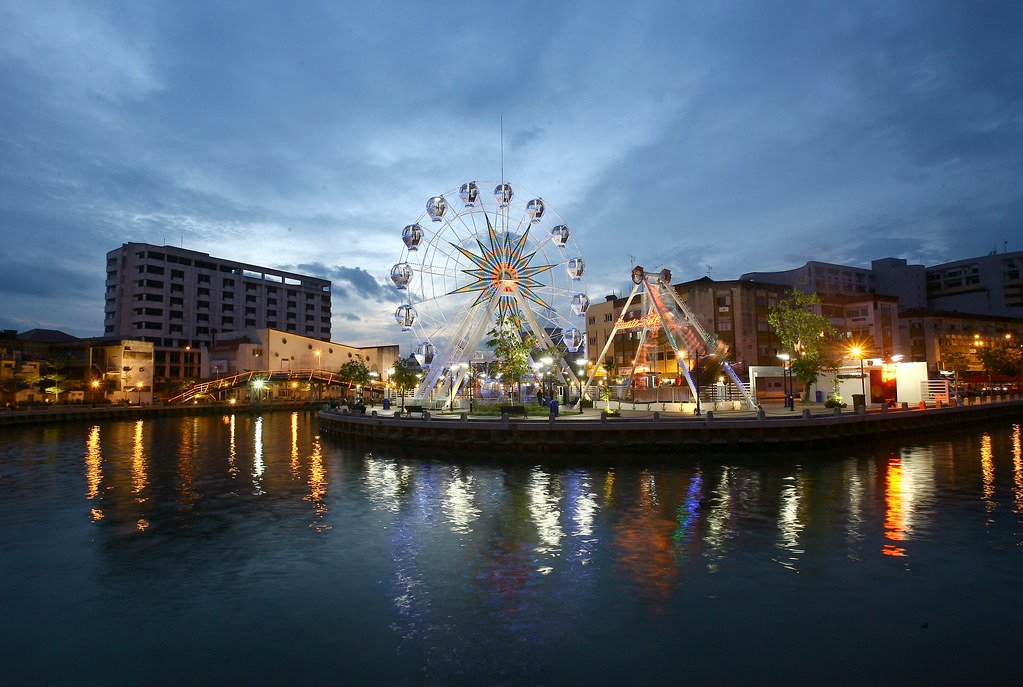
The river running through the historic centre has been beautifully developed as a heritage promenade. Walk or take a river cruise (RM 15, 45 minutes) past old godowns (warehouses), murals, and heritage buildings. The evening river cruise is particularly good when the buildings are lit up.
Baba-Nyonya Heritage Museum
The finest Peranakan (Straits-Chinese) museum in Malaysia. A preserved 19th-century Baba-Nyonya mansion with guided tours showing the extraordinary decorative arts, furniture, and lifestyle of the Peranakan community. One of the best museum experiences in Malaysia — genuinely fascinating if you’re interested in Peranakan culture, which is unique to Malacca, Penang, and Singapore. Book a tour time in advance.
The Food: Malacca’s Peranakan Cuisine
Malacca’s food is distinct from what you’ll find in KL. The Peranakan (Nyonya) cuisine is the main event — a fusion of Chinese and Malay cooking traditions developed by the Straits Chinese community over centuries. Complex, aromatic, labour-intensive, and unique.
Key Dishes to Try
- Ayam Pongteh: Chicken braised in fermented soybean paste with potatoes. A classic Nyonya dish — savoury, slightly sweet, deeply aromatic.
- Asam Pedas: Tamarind and chilli fish stew. Sour, spicy, and intensely flavoured. The Malacca version is considered definitive.
- Nyonya Laksa: Different from Penang’s version — coconut and prawn based, complex spicing.
- Cendol: The Malacca version, often with gula melaka from local palms, is excellent. Queue at the famous stall on Jonker Street.
- Chicken Rice Balls: A Malacca speciality — rice formed into balls and served with poached chicken and dark soy. Slightly different from standard chicken rice.
- Satay Celup: A Malacca variant of satay — skewers of raw ingredients that you dip into a communal boiling satay sauce at the table. Very social eating.
Where to Eat
- Nancy’s Kitchen: The most famous Nyonya restaurant in Malacca. Book ahead — it fills up. Excellent authentic Peranakan food.
- Restoran Peranakan Inn: Another respected Nyonya option, slightly less expensive.
- Capitol Satay Celup: The go-to for satay celup. Queue is real, experience is worth it.
- Jonker Walk food stalls: On Friday and Saturday nights the street fills with cheap food options. Excellent for grazing.
Practical Tips
- Visit on a weekday if possible — Malacca is extremely busy on weekends and public holidays. The city is much more enjoyable with fewer crowds.
- Don’t bother with trishaws for transport — they’re fun for a novelty photo but extremely slow and priced for tourists. Walk or Grab instead.
- The museums close on different days — check opening hours for whichever ones you plan to visit
- Jonker Street night market is Fridays and Saturdays only — plan around this if it matters to you
- Portuguese Settlement (Ujong Pasir) is a 15-minute Grab ride from the historic centre — worth a visit for the Portuguese Eurasian community, devil curry (a fiery vinegar-based curry unique to this community), and the atmospheric settlement on the seafront
- The evening is the best time in Malacca — the heat eases, the lights come on along the river, and Jonker Street comes alive
Suggested Itinerary: Overnight Trip
Day 1 (Arrive early afternoon):
Bus from KL. Check in. Walk St Paul’s Hill — A Famosa, St Paul’s Church ruins, views over the city. Dutch Square and Christ Church. River walk. Jonker Street for dinner (if Friday/Saturday, stay for the night market; otherwise head to a restaurant).
Day 2 (Morning museums, depart):
Morning: Baba-Nyonya Heritage Museum (book a tour time — very much worth it). Chicken rice balls for lunch. Browse Jonker Street antique shops. Afternoon bus back to KL.
Related Reading
🏛️ Book Your Malacca Trip
Agoda
Best prices on Malacca’s heritage guesthouses. Excellent selection of boutique shophouse hotels.
Search Malacca HotelsBooking.com
Compare heritage guesthouses and river-view boutique hotels. Free cancellation on many listings.
Search Booking.comSome links are affiliate links. I earn a small commission if you sign up at no extra cost to you. I only recommend things I actually use.
Why Melaka is Worth Your Time
Melaka is genuinely different from the rest of Malaysia. Its history as a major international trading port from the 15th century onwards attracted Arab, Indian, Chinese, and later Portuguese, Dutch, and British traders — each leaving their mark on the city’s architecture, food, culture, and people. The result is a concentration of living history that feels distinct from anywhere else in the country.
The Baba-Nyonya (Peranakan) culture — the community descended from early Chinese immigrants who adopted Malay language and customs while maintaining Chinese religious practices — is particularly vivid in Melaka. The Baba Nyonya Heritage Museum on Jalan Tun Tan Cheng Lock (known as Millionaires’ Row) is one of the most fascinating house museums in Southeast Asia.
What to See in Melaka
Jonker Street (Jalan Hang Jebat)
The main artery of Melaka’s Chinese quarter — lined with antique shops, cafes, Peranakan restaurants, souvenir vendors, and heritage buildings. During the day it’s busy and browseable. On Friday and Saturday nights it becomes a pedestrianised night market with food stalls, live music, and even more crowds. Walking the full length of Jonker Street and its branching lanes is the core activity in Melaka’s old town.
Stadthuys and Red Square (Dutch Square)
The deep terracotta-red Stadthuys (former Dutch town hall, now a history museum) and the surrounding Red Square are Melaka’s most-photographed ensemble. Built by the Dutch in the mid-17th century, it’s one of the oldest remaining Dutch buildings in Asia. The Queen Victoria Fountain in front and the Christ Church (also Dutch, also red) complete the square.
A Famosa and St Paul’s Hill
A Famosa is the ruin of a Portuguese fortress built in 1511 — only the Porta de Santiago gate survives (the British demolished most of it to prevent the Dutch from using it). Behind the gate, St Paul’s Hill rises to the ruins of St Paul’s Church, a Portuguese chapel built in 1521 with a Dutch section added later. The hilltop views over the river and the old town are good, and the graveyard surrounding the roofless church contains Dutch tombstones.
Baba Nyonya Heritage Museum
Three interconnected townhouses on Millionaires’ Row, preserved and converted into a museum of Peranakan life. Guided tours (mandatory) take you through rooms filled with antique furniture, Peranakan porcelain, textiles, and photographs. The architecture itself — with its elaborate carved woodwork, tiled floors, and internal air wells — is extraordinary. One of the best house museums in Malaysia.
Cheng Hoon Teng Temple
Malaysia’s oldest functioning Chinese temple, built in 1646. Still an active place of worship with incense, offerings, and devotees throughout the day. The architecture is classical southern Chinese, with elaborate carved roof ornamentation and painted beams. Free to enter and genuinely atmospheric.
Kampung Kling Mosque and Sri Poyyatha Vinayagar Moorthi Temple
Melaka’s religious diversity is exemplified on Jalan Tukang Emas, where you’ll find a mosque, a Hindu temple, and a Chinese temple within a few hundred metres of each other. The Kampung Kling Mosque is particularly distinctive — built in a Sumatran architectural style with a multi-tiered roof rather than the dome typically associated with Islamic architecture.
What to Eat in Melaka
Melaka’s food scene is one of its strongest selling points, particularly for Peranakan cuisine.
Nyonya food: The cooking of the Peranakan community — a blend of Chinese and Malay techniques and ingredients. Ayam pongteh (chicken in fermented soybean sauce), asam pedas ikan (fish in tamarind and chilli), and babi pongteh (pork belly in soybean sauce, for non-halal restaurants) are signature dishes. Restoran Nyonya Makko on Jonker Street is long-established.
Chicken rice balls: Melaka’s most famous dish — rice cooked with chicken stock and shaped into golf balls, served with poached chicken and a dipping sauce. Hoe Kee Chicken Rice on Jonker Street is the most famous purveyor.
Cendol: A dessert of green rice flour jelly, coconut milk, palm sugar, and shaved ice — ubiquitous across Malaysia but Melaka’s cendol vendors are celebrated as among the best. The original Jonker Street cendol stall has been operating for decades.
Satay celup: A Melaka specialty — skewers of raw ingredients (seafood, meat, vegetables, tofu) which you dip into a communal pot of boiling satay sauce at your table. Capitol Satay on Lorong Bukit China is the classic venue.
Getting to Melaka from KL
Bus: The most common option. Express buses from TBS (Terminal Bersepadu Selatan) at Bandar Tasik Selatan LRT station run frequently to Melaka Sentral bus terminal. Journey time approximately 2 hours, tickets around RM12–15. From Melaka Sentral, take a local bus or Grab to the historic core (about 20 minutes, as Sentral is outside town).
Grab / private car: Around RM120–180 from KL city centre, approximately 2 hours depending on traffic. Faster and more convenient but significantly more expensive than bus.
Train: There’s no direct train to Melaka — the nearest KTM station is at Pulau Sebang/Tampin, about 30km away, which then requires onward transport. Bus is simpler.
Day Trip or Overnight?
Melaka can be done as a day trip from KL — leave KL by 8am, spend the day, return in the evening. But I strongly recommend an overnight stay, particularly if you’re interested in the night market on Jonker Street (Friday/Saturday) and want a more relaxed pace to absorb the atmosphere. The city genuinely comes alive in the evening. A boutique heritage hotel in the historic core adds considerably to the experience.
Plan Your Melaka Trip
Melaka’s heritage boutique hotels in the old town are some of the best-value stays in Malaysia. Book on Booking.com for good free cancellation options — essential when planning around bus schedules.
Book Melaka Hotels →Agoda often has excellent rates for smaller boutique properties in Melaka’s heritage zone — check both platforms to compare. Proximity to Jonker Street is worth paying for.
Find Melaka Hotels →Spend in ringgit on bus tickets, food, and entrance fees without your UK bank’s conversion charges. Wise gives you the real exchange rate every time you pay.
Get Wise →Some links are affiliate links. I earn a small commission if you sign up at no extra cost to you. I only recommend things I actually use.