Malaysian Indian food is one of the great culinary traditions of Southeast Asia and, I’d argue, one of the most underappreciated by visitors who come expecting only nasi lemak and char kway teow. The Tamil Hindu community that settled in Malaysia from the 19th century onwards brought with them a vibrant South Indian cooking tradition that has developed its own Malaysian character over generations — more coconut, more dried chilli, more richness than you’d find in Chennai or Madurai today.
Prices checked August 2026. Everything here is what I actually paid or was actually quoted, in ringgit, in Kuala Lumpur. Malaysia moves fast — check before you commit to anything.
This guide covers the essential Malaysian Indian dishes, where to find them, and what makes Malaysian Indian food distinctive.
The Foundations: What Makes Malaysian Indian Food Distinctive
Malaysian Indian cuisine is primarily South Indian in origin — Tamil-speaking communities from Tamil Nadu and Sri Lanka who came to work in the rubber plantations and railways in the British colonial period. Over time, the cooking absorbed Malay ingredients (coconut milk, pandan, lemongrass, galangal) and adapted to local produce, creating a version of South Indian food with its own unique character.
The community is predominantly Hindu, which historically made much Malaysian Indian food vegetarian-heavy. Today you’ll find both vegetarian and non-vegetarian options, but the vegetarian tradition remains strong, particularly in restaurants serving banana leaf rice and tiffin.
The mamak (Malaysian Tamil Muslim) community has its own distinct culinary tradition — overlapping with South Indian food but incorporating halal meat, bread doughs, and elements from North Indian Muslim cooking. Mamak stalls are omnipresent in KL and serve some of the most beloved street food in the country.
Roti Canai: The National Breakfast Food
Roti canai is arguably Malaysia’s most beloved breakfast food across all ethnicities. A laminated flatbread (similar to paratha or murtabak in technique) cooked on a flat griddle with ghee or oil until crisp and flaky outside, tender inside. Served with dhal curry and sambal — you tear pieces, dip, and eat.
The varieties are extensive: roti telur (with egg cooked in), roti pisang (with banana), roti tisu (crispy paper-thin version), roti bom (thick dense bomb-shaped version), and the spectacularly rich roti canai banjir (drowned in curry). Prices at mamak stalls are remarkably low — plain roti canai typically costs RM1.20–1.50.
The best roti canai is made by experienced hands who throw and stretch the dough repeatedly until it becomes thin and layered. Watch the process at any mamak stall and you’ll understand why it takes skill.
Banana Leaf Rice: The South Indian Feast
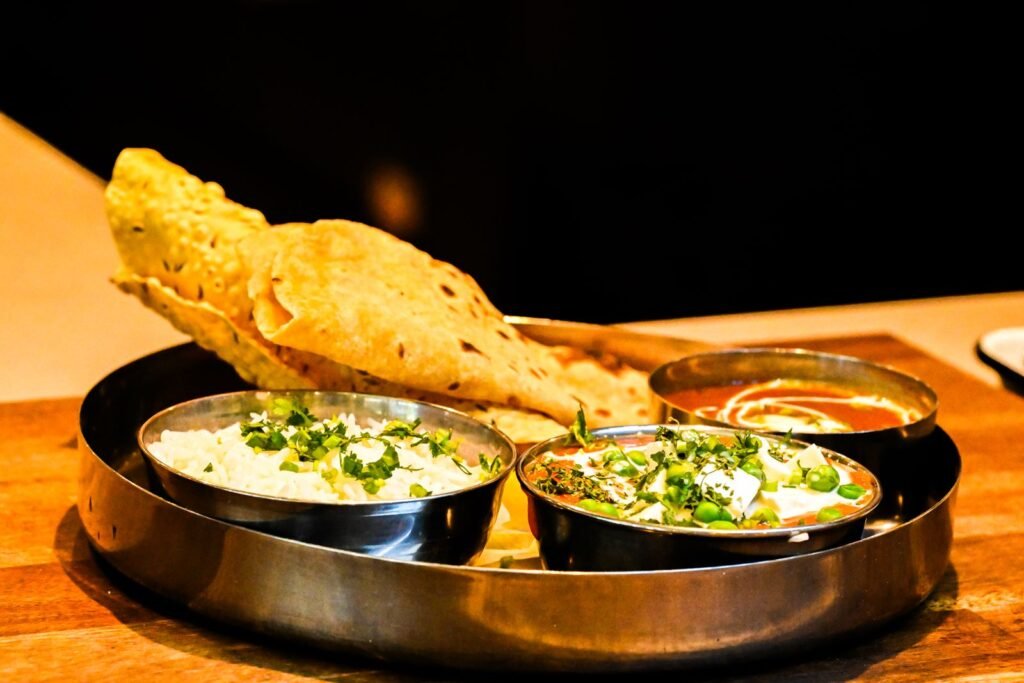
Banana leaf rice (nasi daun pisang) is the full South Indian meal experience. Rice is served on a banana leaf surrounded by an array of vegetable side dishes — typically 3–5 curries, dhal, rasam (thin tamarind and tomato soup), papadom, and pickles. Accompaniments are refillable. Finish by folding the banana leaf away from you to signal you’re done (folding towards you signals a dissatisfied customer — important etiquette to know).
Non-vegetarian options include chicken curry, mutton varuval (dry-spiced mutton), fish curry, and various seafood. But the vegetable-only banana leaf is complete in itself.
The best area for banana leaf rice in KL is Brickfields (Little India) — multiple restaurants within walking distance of each other. Bangsar also has several good venues. Expect to pay RM12–25 depending on whether you add meat and how many extras you take.
Nasi Kandar: The Penang Institution
Nasi kandar is a Penang specialty that has spread throughout Malaysia. Named for the pole (kandar) that hawkers originally used to carry their pots, it’s rice served with multiple curry gravies poured over — ideally a flood of different curries mixing together into a rich sauce-over-rice experience. Signature to nasi kandar is pouring multiple curry sauces over each other on the rice (campur / mixed).
Penang’s nasi kandar shops are the most celebrated — Line Clear nasi kandar (in an alley off Jalan Penang, open 24 hours) and Nasi Kandar Pelita (with multiple KL outlets) are among the most famous names. In KL, Pelita is reliable. Nasi kandar is typically a late-night eating tradition — some shops are busiest at 2am.
Thosai (Dosa): Breakfast Crepe
Thosai (the Malaysian/Tamil spelling of dosa) is a fermented rice-and-lentil crepe cooked on a griddle. Plain thosai is slightly sour from the fermentation, served with coconut chutney and sambar. Varieties include thosai telur (egg thosai), thosai masala (filled with spiced potato), and the very thin crispy paper thosai. A wonderful breakfast alongside teh tarik (pulled tea).
Teh Tarik and Malaysian Indian Drinks
Teh tarik — “pulled tea” — is as much an art form as a drink. Strong Assam tea brewed with condensed milk and evaporated milk, then poured repeatedly between two cups from a height to create foam and cool the drink. The rhythm of the pour is theatrical; the result is sweet, milky, intensely aromatic. Available at every mamak stall for RM1.50–2.
Teh halia is teh tarik with ginger — particularly good if you have a sore throat or want something warming. Pulled milk coffee (kopi tarik or teh o) follows the same method with or without milk.
Other Must-Try Malaysian Indian Dishes
Murtabak: A stuffed pancake — thicker than roti canai, filled with spiced minced meat and egg, folded and cooked on the griddle. Served with curry sauce and pickled onion. A substantial street food meal in itself.
Cendol: A dessert claimed by multiple Malaysian communities but deeply embedded in the Indian Muslim tradition — shaved ice with coconut milk, palm sugar syrup, and green rice flour jelly noodles. Refreshing and perfect in KL’s heat.
Rojak: A fruit and vegetable salad dressed in thick shrimp paste sauce (Indian-influenced variant, distinct from the Chinese fruit rojak). Tangy, spicy, and complex.
Nasi briyani: Biryani rice cooked with spices, often served with mutton, chicken, or fish curry at Indian Muslim restaurants. The Hyderabadi-style biryani tradition is well-represented in KL.
Explore KL’s Food Scene
Stay in Brickfields to be at the heart of KL’s Indian food scene — banana leaf restaurants, teh tarik stalls, roti canai shops, and the best murtabak in the city all within walking distance.
Find Brickfields Hotels →Malaysian Indian food is wonderfully affordable — roti canai for RM1.50, banana leaf for RM15. Wise means you’re spending in ringgit at the real exchange rate with no hidden conversion charges.
Get Wise →Planning a Penang trip for nasi kandar and banana leaf? Booking.com has solid coverage of Georgetown hotels at all price points.
Book Penang Hotels →Some links are affiliate links. I earn a small commission if you sign up at no extra cost to you. I only recommend things I actually use.