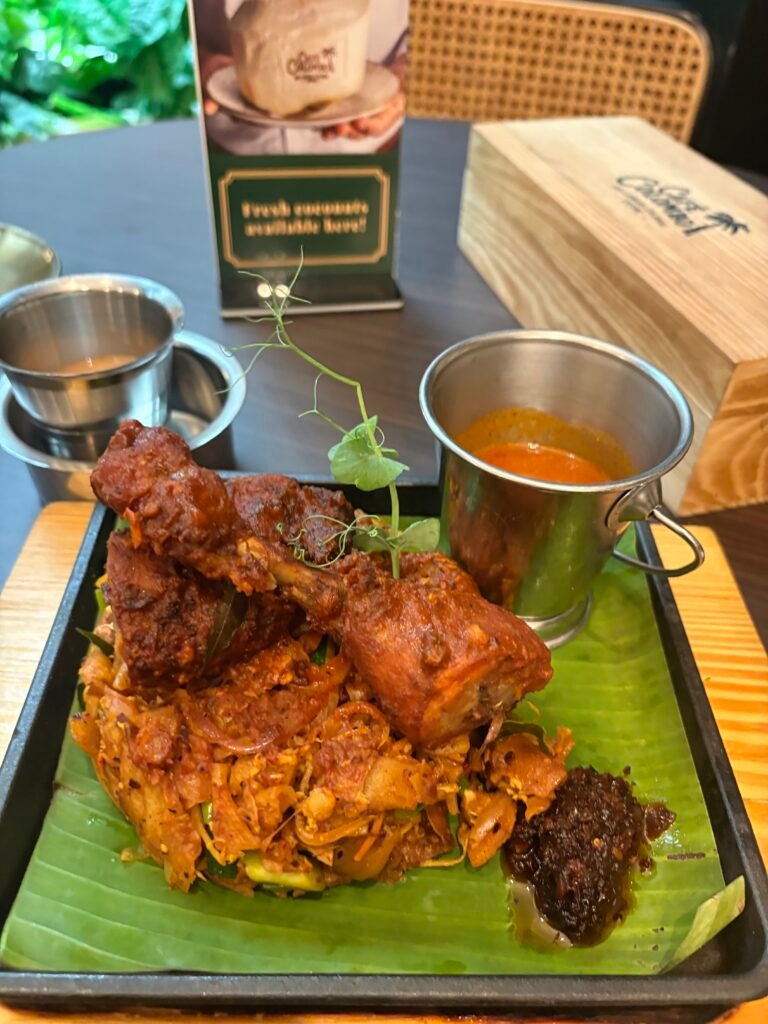
One of the first things I tell anyone moving to KL: put down the restaurant app. Step away from the hotel buffet. Walk out into the heat and find a hawker stall. Because what you’ll discover there — on a plastic stool, under a corrugated roof, for somewhere between RM5 and RM12 — will probably be the best food you’ve eaten in your life.
Prices checked August 2026. Everything here is what I actually paid or was actually quoted, in ringgit, in Kuala Lumpur. Malaysia moves fast — check before you commit to anything.
Malaysia’s hawker culture is not a budget option. It’s not a compromise. It’s the real thing — generations-old recipes, handed down and refined, served by people who have been cooking one dish for twenty or thirty years. The Penang char kway teow man who woks your noodles has been doing exactly this since before you were born. That’s not a casual approach to food. That’s mastery.
This guide covers everything you need to know to navigate hawker stalls and kopitiams in Kuala Lumpur — what to eat, how to order, where to go, how to behave, and what not to do if you want to eat like a local rather than a tourist.
Hawker Stalls vs. Kopitiams vs. Food Courts: What’s the Difference?
These terms get confused, so let’s be clear:
Hawker stalls (gerai) are individual food vendors, often set up along roadsides, in open-air markets, or in clusters. They usually sell one type of food — one vendor does only nasi lemak, another does only char kway teow. The stall might be a mobile cart, a simple tent, or a small structure with a charcoal grill and a gas burner.
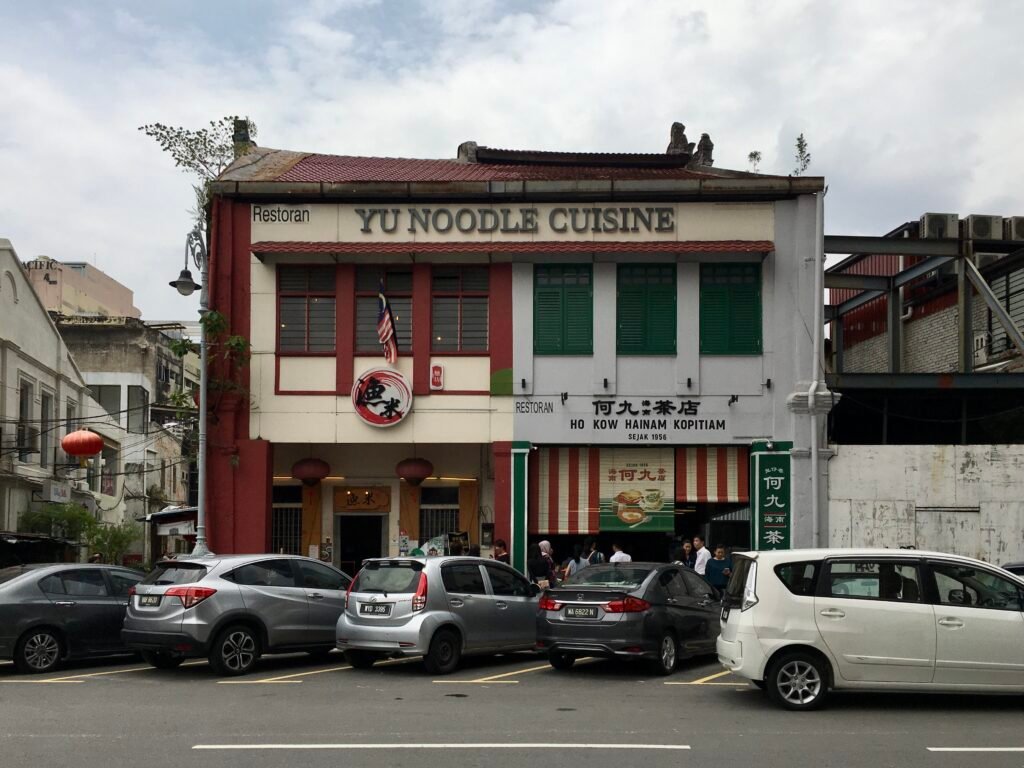
Kopitiams are traditional Chinese coffee shops — the word comes from Hokkien “kopi” (coffee) and Malay “kedai” (shop). They’re permanent establishments, usually in shophouses, with marble-topped tables and basic wooden chairs. Multiple independent food vendors operate within or alongside a kopitiam, each selling their own specialty. You order drinks from the kopitiam itself and food from whichever vendors have set up there. Kopitiams are open from early morning (5–6am) and many close by midday or early afternoon, as they cater to the breakfast and lunch crowd.
Food courts (gerai makanan) are more modern, often air-conditioned, commonly found in shopping malls. Multiple vendors under one roof, a central ordering/seating area, sometimes with a centralised payment system. Cleaner and more comfortable than traditional hawker stalls, but often slightly more expensive and occasionally less authentic.
Night markets (pasar malam) operate on weekly schedules in different KL neighbourhoods — one night per area per week. You’ll find hawker food, fresh produce, street snacks, and household goods all mixed together. The atmosphere is excellent and prices are very low.
The Essential KL Hawker Dishes
Nasi Lemak
Malaysia’s unofficial national dish. Coconut rice served with sambal (chilli paste), a hard-boiled egg, cucumber slices, dried anchovies (ikan bilis), and roasted peanuts. The basic version is breakfast-appropriate and costs RM2–5 wrapped in banana leaf. Add-ons — fried chicken, rendang beef, curry — transform it into a more substantial meal. Finding a truly excellent nasi lemak (the coconut rice properly fragrant, the sambal complex and not just hot) is a KL quest worth taking seriously.
Char Kway Teow
Flat rice noodles wok-fried over fierce heat with prawns, Chinese sausage (lap cheong), bean sprouts, eggs, and dark soy sauce. The best versions have “wok hei” — the smoky charred flavour that comes from cooking at extremely high temperature. This is why the best char kway teow comes from hawkers who’ve been doing it for years: they’ve learned how to work their wok. Expect to pay RM8–14.
Hokkien Mee
KL-style Hokkien mee is different from Penang Hokkien mee — don’t confuse them. KL Hokkien mee is thick yellow noodles braised in dark soy sauce with pork, squid, and vegetables. Rich, glossy, intensely savoury. One of the defining dishes of KL Chinese cooking. Around RM10–16.
Bak Kut Teh
Pork ribs simmered for hours in a broth of garlic and herbs — sometimes peppery and clear (Teochew style), sometimes darker and more herby (Klang style). Served with rice, you tiao (fried dough sticks), and strong Chinese tea. A beloved weekend breakfast or lunch. Klang, 30 minutes west of KL, is famous for its bak kut teh and worth the trip. In KL proper, look for it in Kepong, Balakong, and Taman Desa.
Roti Canai
Flaky flatbread made by spinning the dough in the air and folding it multiple times before griddling. Served with dhall (lentil curry) and/or curry sauce. Costs RM1.50–2.50 for a plain roti canai. Variations include roti telur (with egg), roti pisang (with banana), and roti tissue (stretched into a tall crispy cone). Mamak stalls serve this 24 hours a day and it’s one of the best late-night or early-morning eating options in KL.
Laksa
A broad category of spiced noodle soups. In KL you’ll encounter several varieties: curry laksa (coconut milk-based, rich and fiery), asam laksa (sour fish-based broth — more of a Penang specialty but available in KL), and Sarawak laksa (if you’re lucky). Each one is a complete flavour world. Curry laksa in particular — fragrant, creamy, spiked with chilli and filled with tofu puffs, cockles, and noodles — is a dish that changes people.
Wantan Mee
A Cantonese-origin noodle dish — springy egg noodles served either in broth or dry (tossed in sauce), topped with char siu (BBQ pork), wonton dumplings, and vegetables. The dry version (kon lo) is particularly popular in KL. The noodles should have a slight bounce, the char siu should be glazed and slightly charred at the edges. RM8–13.
Nasi Kandar
A Penang Indian Muslim institution that’s spread throughout Malaysia. White rice topped with your choice of curries, side dishes, and proteins — chicken, mutton, squid, prawns, fish, vegetables — with the curry sauces ladled over everything. The art is in the combination of sauces mixing together on the rice (they call this “banjir” — flooding). Penang Nasi Kandar chains like Kayu, Line Clear, and Pelita are well-represented in KL.
Cendol
The essential Malaysian dessert hawker item — shaved ice with green rice flour jelly worms, coconut milk, and palm sugar (gula melaka) syrup. On a hot KL day (every KL day), a RM3–5 cendol from a good hawker stall is one of the best things in the world. Look for versions with additions: red beans, durian, pulut (glutinous rice).
The Mamak Stall: A KL Institution
Mamak stalls deserve their own section. Run by Malaysian Indians (Tamil Muslims), mamak restaurants are open 24 hours, serve roti canai, teh tarik, mee goreng, maggi goreng, and a rotating menu of rice dishes, and are central to KL social life in a way that’s hard to overstate.
A mamak is where you watch football at 3am. Where you have teh tarik (pulled tea, frothy and sweet) after a night out. Where workers eat before the dawn call to prayer. Where students study through the night. Where entire neighbourhoods gather to watch the World Cup. The combination of 24-hour availability, cheap prices (RM5–15 for most dishes), and social atmosphere makes them uniquely KL.
Teh tarik (RM2–3) — sweet pulled milk tea, prepared by pouring between vessels from height to create froth — is the signature drink. Order it “kurang manis” (less sweet) if you want to dial back the sugar. “Kosong” means without sugar entirely.
How to Navigate a Hawker Centre
For newcomers, hawker centres can feel chaotic. They’re not. There’s a system:
Find a table first. Put something on it — a packet of tissues is the traditional KL table-reservation system. This tells others the table is taken.
Order drinks from the central drinks vendor (usually the kopitiam operator). They’ll bring drinks to your table and keep track of what you owe.
Walk to individual food stalls to order and sometimes pay. Different stalls have different payment arrangements — some charge you immediately, some have a vendor who comes to your table, some use a centralised chit system. Watch what others do and follow.
You can order from multiple stalls and eat it all at the same table. This is normal and expected. Sharing a table with strangers is also completely normal in busy hawker centres.
Point is universally understood. Even if you don’t speak Malay, Chinese dialects, or Tamil, pointing at what the person next to you is eating while holding up one finger is a perfectly valid order.
The KL Coffee Culture
Kopitiam coffee (kopi) is not Starbucks coffee. Traditional kopi is made from beans roasted with butter and sugar, then brewed strong and served with sweetened condensed milk. It’s thick, sweet, intense, and delicious. Key terms:
- Kopi — coffee with condensed milk
- Kopi O — black coffee with sugar
- Kopi kosong — black coffee, no sugar
- Kopi C — coffee with evaporated milk
- Kopi peng — iced coffee (add “peng” to make any drink iced)
- Teh — tea (all the same variations apply)
A kopi at a traditional kopitiam costs RM1.50–2.50. If you’re paying more than RM5 for coffee, you’ve accidentally wandered into a hipster café.
Where to Find the Best Hawker Food in KL
Jalan Alor
The most famous hawker street in KL — lined with restaurants and stalls serving everything from grilled meat skewers to fresh seafood and durian. Very tourist-friendly (menus in English, prices slightly higher), but genuinely good food. Best visited from 6pm onwards when the night market atmosphere comes alive.
Petaling Street (Chinatown)
Petaling Street’s day and night market has excellent hawker food woven through it. Char kway teow, yong tau foo, popiah, fresh fruit — all available at local prices. Go before 10am for the freshest morning hawker finds.
Brickfields (Little India)
For banana leaf rice, South Indian thali, idli, dosa, and Indian Muslim food. The area around Jalan Tun Sambanthan has excellent and cheap Indian hawker food. Nasi kandar and roti canai from the mamak stalls here are outstanding.
Imbi Market (Pasar Baru Bukit Bintang)
A covered wet market with excellent morning hawker stalls on the upper floor. Authentic, no-frills, local prices. Crowds of Malaysian workers eating breakfast — always a sign you’re in the right place. Opens around 6am and the best stalls often sell out by 10am.
Kepong and Taman Desa
For more local, less tourist-influenced hawker food, head to these residential areas. Bak kut teh, Hokkien mee, and char kway teow at prices that make the tourist-area versions seem expensive.
Etiquette at Hawker Stalls
A few things to know:
Don’t be precious about hygiene. Street food in KL is safer than it looks to a Western eye. Millions of people eat from these stalls daily. Trust the volume — high-turnover stalls have fresh ingredients and hot cooking that kills bacteria. A dirty-looking cloth on a marble counter at a 60-year-old kopitiam is not a health risk; it’s patina.
Don’t rush. Hawker food culture is not fast food culture. Wait patiently. Don’t wave money at people. Don’t hover aggressively over the wok station.
Halal and non-halal. Malaysia is a Muslim-majority country and food is categorised as halal (permissible) or not. Malay stalls and mamak stalls are always halal. Chinese stalls often serve pork. It’s fine to eat at both on different occasions but be aware that mixing them at the same table in certain contexts can be inappropriate. In mixed hawker centres, most Malay diners avoid the pork stalls but this is a personal choice — no one will say anything to you as a foreigner.
Eat with your right hand if eating with hands (Indian food, some Malay dishes). The left hand is considered unclean in Islamic and many South Asian traditions. Cutlery is available at virtually all hawker stalls if you’d prefer.
Learn a few phrases. “Satu” (one), “dua” (two), “kurang pedas” (less spicy), “sedap” (delicious — use this and watch people light up) will take you a long way.
Get out there and eat. KL’s hawker culture is one of the world’s great food traditions, and it’s available to you, right now, for less than the price of a London meal deal. Don’t waste that.
Plan Your KL Foodie Trip
Book a hotel near Bukit Bintang or Chinatown and you’re walking distance from KL’s best hawker stalls. Booking.com has excellent options at all price ranges.
Find KL Hotels →Agoda is often cheaper than other platforms for KL hotels, particularly for longer stays. Check both and compare — the gap can be significant.
Search Agoda →Most hawker stalls are cash-only. Withdraw MYR with your Wise card at any KL ATM and get the real exchange rate with minimal fees.
Get Wise →Some links are affiliate links. I earn a small commission if you sign up at no extra cost to you. I only recommend things I actually use.
Related Reading
Eating like a local is where the savings are. Eating like a Brit is where they go.