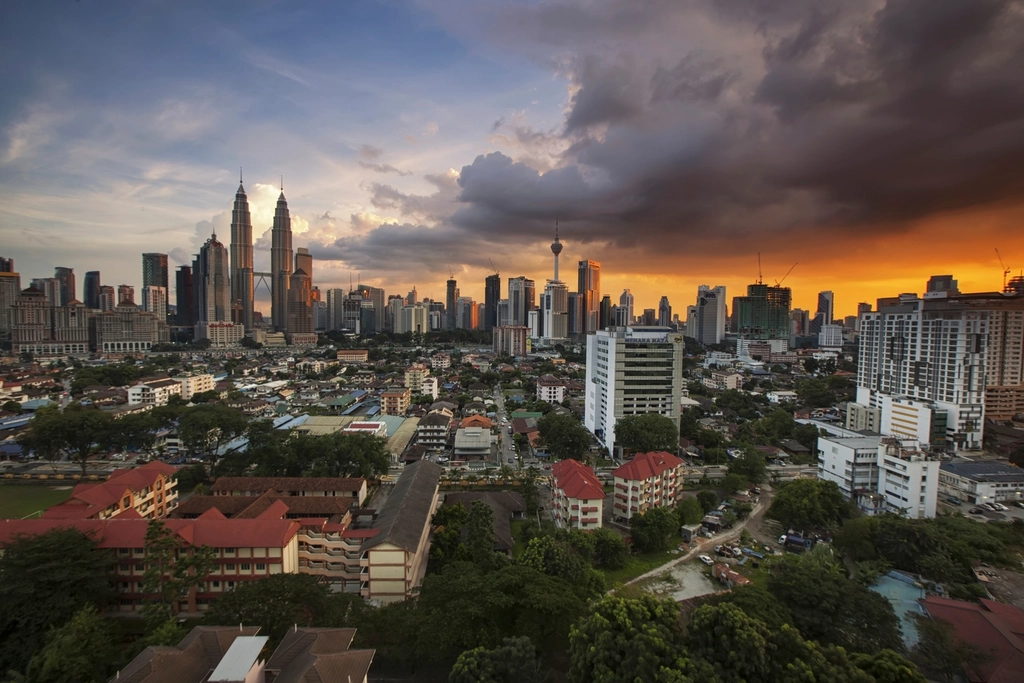
I moved from the UK to Kuala Lumpur in 2022, and I made most of the mistakes you can make. I spent weeks researching the wrong things, didn’t research the right things at all, and arrived with a completely inaccurate mental picture of what daily life would look like.
Prices checked August 2026. Everything here is what I actually paid or was actually quoted, in ringgit, in Kuala Lumpur. Malaysia moves fast — check before you commit to anything.
This guide is the one I wish I’d had — written specifically for British people considering or planning a move to Malaysia. Some of it overlaps with general “moving to KL” advice, but there’s a lot that’s specific to coming from the UK: the visas available for British passport holders, the tax complications, what life genuinely compares like, and the things that surprise British expats specifically.
Why Malaysia? And Why Do British People Move There?
Malaysia has a long connection with Britain. It was a British colony until independence in 1957, and the legacy of that relationship is everywhere: English is genuinely widely spoken (not just tourist English — it’s used in business, in courts, in higher education, in media), the legal system is based on English common law, cricket is played, and there’s a robust British expat community that has been established in Malaysia for generations.
British people move to Malaysia for a variety of reasons:
- Work: Multinational companies with KL regional offices (Shell, HSBC, IBM, Standard Chartered, and dozens of others) send British employees here
- Digital nomads: Remote workers attracted by low cost of living, fast internet, and the DE Rantau visa
- Retirement: The MM2H visa has historically attracted British retirees seeking warm weather and affordable private healthcare
- Relationships: Marriage to a Malaysian partner brings a significant number of British expats
- Teaching and education: International schools actively recruit British teachers
Visa Options for British Passport Holders
The UK and Malaysia have a strong bilateral relationship, and British passport holders can enter Malaysia visa-free for up to 90 days — one of the more generous tourist allowances in the region.
For longer stays, your options depend on your situation:
Employment Pass (EP)
If you’re employed by a Malaysian company or by a foreign company with a Malaysian registered entity, your employer applies for your Employment Pass through the Expatriate Services Division (ESD). This is the standard route for company-posted expats. It ties you to your employer, but it grants full resident status and allows your dependants to join you.
DE Rantau Digital Nomad Visa
Malaysia’s dedicated digital nomad visa, launched in 2022. For remote workers employed by companies outside Malaysia, earning above RM24,000/year (recently increased — check current threshold). Grants a 12-month visa renewable for a second year. The most practical route for independent British remote workers.
The application is online through MDEC (Malaysia Digital Economy Corporation). British passports are straightforward to process. I know several British remote workers who’ve used this route successfully.
MM2H (My Second Home)
The long-term retirement/extended stay visa. Requirements were significantly tightened in 2021 — minimum RM40,000/month offshore income and RM1,000,000 fixed deposit. Accessible only to higher-net-worth individuals now, but for those who qualify, it offers a 5-year renewable visa with multiple-entry.
Spouse / Dependant Visa
If you’re married to a Malaysian citizen, you can apply for a Long-Term Social Visit Pass (Spouse), which can be renewed annually and allows you to live and eventually work in Malaysia. The process takes several months and requires documentation from both sides, but it’s a well-established route.
Social Visit Pass (Visa Run Route)
Some British expats — particularly freelancers who don’t qualify for DE Rantau and aren’t employed by a Malaysian entity — manage on rolling 90-day tourist stays with periodic border runs (to Thailand, Singapore, or a short flight elsewhere). This is legal but not recommended as a long-term strategy — Malaysian immigration periodically scrutinises patterns of repeated entry.
UK Tax Considerations
This is where I wish someone had sat me down properly before I left. The UK tax position for British expats in Malaysia is complicated and has become more so in recent years.
UK tax residency: If you leave the UK and spend fewer than 183 days there in a tax year, you can claim non-resident status under the Statutory Residence Test (SRT). This means you generally don’t pay UK income tax on your foreign income. However, you may still owe UK tax on UK-source income (rental income from a UK property, UK pension income, dividends from UK companies).
Malaysian tax residency: If you spend 182+ days in Malaysia in a calendar year, you’re a Malaysian tax resident and pay Malaysian income tax on Malaysian-source income. Rates are progressive, starting at 1% and rising to 30% on the highest incomes.
Foreign-source income (FSI) tax: Malaysia introduced taxation of foreign-source income received in Malaysia from 2022. This is still evolving and was initially applied broadly before some categories were exempted. As of my last update, remittances from employment income abroad were largely exempt for individuals — but this changes. Get current advice from a qualified tax advisor who understands both UK and Malaysian tax.
The UK-Malaysia Double Taxation Agreement: The UK and Malaysia have a double taxation treaty that prevents you from being taxed twice on the same income. Understanding how this applies to your specific situation requires professional advice.
My strong recommendation: Get a tax advisor before you leave the UK — one who understands both UK and Malaysian tax. The cost of professional advice is trivial compared to the cost of getting it wrong. HMRC’s rules on domicile, tax residency, and overseas income are complex, and the interaction with Malaysian tax rules adds another layer.
Transferring Money Between the UK and Malaysia
Wise (formerly TransferWise) is genuinely the best solution for British expats in Malaysia. It offers real mid-market exchange rates with low transparent fees for GBP to MYR transfers. I use it for everything — monthly living expenses, paying rent, large purchases. The rate difference compared to a bank transfer adds up significantly over months and years.
Wise also offers a multi-currency account and debit card, which means you can hold both GBP and MYR and switch between them when the rate is favourable. For someone managing money in both countries, it’s an essential tool.
NHS and Healthcare
One of the biggest practical adjustments for British expats is losing NHS access. You’re no longer entitled to free NHS treatment as a non-resident — though if you return to the UK for visits, you can use emergency NHS services.
In Malaysia, you’ll be using private healthcare for everything. The good news: KL’s private hospitals are excellent and significantly cheaper than UK private healthcare. A GP consultation costs RM80–150. Specialist referrals are accessible without a GP gatekeeper. Healthcare quality in the top KL hospitals is genuinely high.
You need health insurance. SafetyWing is a flexible monthly subscription option — good while you’re establishing yourself. For long-term cover, consider a comprehensive international health insurance plan from Cigna Global, AXA PPP International, or Bupa Global. Premiums depend on age and coverage level.
Prescriptions: Many medications available only on prescription in the UK can be bought over the counter in Malaysian pharmacies. Common medications are significantly cheaper in Malaysia. This is genuinely useful for managing chronic conditions cost-effectively.
Pensions
If you have a UK pension — state pension or private — this continues to accrue or pay out regardless of where you live. The state pension is paid to you wherever in the world you are, though it does not increase with inflation for residents of many countries outside the EU and certain treaties. Check with the UK Pension Service whether Malaysia is a country where your pension will be “uprated” — the current status as of 2024 is that it is NOT — your state pension will be frozen at the rate when you first claim it if you’re living in Malaysia.
Private pension contributions can continue from abroad under certain conditions. Get financial advice before making changes to any pension arrangements.
Driving in Malaysia: Good News for British Drivers
The UK and Malaysia have a mutual driving licence recognition — you can drive in Malaysia on a valid UK licence for 12 months. After 12 months you need a Malaysian licence — and since 19 May 2025 you can no longer simply swap a UK one for it. JPJ stopped foreign licence conversions on that date for everybody except MM2H participants, diplomats and returning Malaysians. Everyone else goes through a Malaysian driving school, the theory course and test, and then the circuit and road tests.
Driving is on the left in Malaysia (same as the UK). Cars are right-hand drive. Malaysian roads are generally good quality. The main adjustment is the driving culture — lane discipline is more relaxed, motorcycles filter everywhere, and Grab/Waze are essential for navigation (Google Maps is less accurate for Malaysian road changes).
Culture Adjustments for British Expats
Some things are easier for British expats than for others:
Language: English is genuinely functional in KL. You can live your entire life in KL speaking only English. This is an advantage of the British connection. Learning some Malay is respectful and useful, but not essential for day-to-day life.
The colonial history: Being British in Malaysia comes with a historical context. Malaysians are generally warm toward British visitors and expats — the post-colonial relationship is not fraught in the way some post-colonial relationships are. But being aware of and respectful about the history is appropriate.
The food: Malaysian food is extraordinary, and British palates tend to adapt well — it’s flavourful, varied, and generally accessible. The spice levels can be adjusted at most eateries if needed. Missing British food? Marks & Spencer has a food hall in several KL malls. Cold Storage and Village Grocer carry a range of imported British products. You won’t suffer.
The weather: Year-round 30°C+ is a significant adjustment from the UK. Most British expats genuinely love it after the initial acclimatisation period of 2–4 weeks. A small number find the heat and humidity genuinely difficult long-term. Try a month in KL before committing to a longer move.
Speed of life: KL is slower-paced than London. Bureaucratic processes take longer. Traffic is heavy. Things break without urgency. For British people who are used to efficiency and reliability, this requires patience. Most people adjust and come to appreciate the lower stress of the pace.
The British Community in KL
KL has a well-established British expat community. Key networks include:
- British Malaysian Chamber of Commerce (BMCC): Business events, networking, and a social calendar
- Royal Selangor Club: One of KL’s oldest clubs (founded 1884), historically British, has cricket, social facilities, and a long-standing expat membership
- British High Commission KL: Registers British nationals, consular services, and runs occasional community events
- Facebook groups: British Expats in Malaysia and similar groups are active and useful for practical questions
- St. George’s Society: Social group for British expats in KL
Football: watch Premier League in any of KL’s sports bars on Sunday mornings (8am UK time is 3pm or 4pm in Malaysia depending on GMT offset). The EPL has an enormous following in Malaysia and matches are shown everywhere.
Practical First Steps
If you’re planning a move from the UK to Malaysia:
6 months before: Start the visa process. Get tax advice. Open a Wise account.
3 months before: Sort health insurance. Look at international schools if relevant. Contact your bank about overseas use and potential account closure.
1 month before: Register with the British High Commission. Inform HMRC of your departure date. Make sure your UK passport is valid for 6+ months beyond your planned return date.
On arrival: Get a local SIM card. Open a Malaysian bank account (takes time — start early). Register your address if on long-term visa.
And spend the first few weeks eating as much Malaysian food as possible. That part is not optional.
Essential Tools for British Expats in Malaysia
The best way to move money between the UK and Malaysia. Real exchange rates, low fees. I use it every month for living expenses and it saves real money compared to bank transfers.
Monthly health insurance for expats. Essential once you leave the NHS. Flexible monthly subscription, cancel any time.
Access UK banking, streaming and government websites from Malaysia. A UK VPN server solves every geo-restriction problem instantly.
Some links are affiliate links. I earn a small commission if you sign up at no extra cost to you. I only recommend things I actually use.
Related Reading
One thing to get right before you fly: the free arrival card, and the fake websites charging for it.
Before you go any further, the honest counter-argument: who should not move to Malaysia. I would rather you read that first.