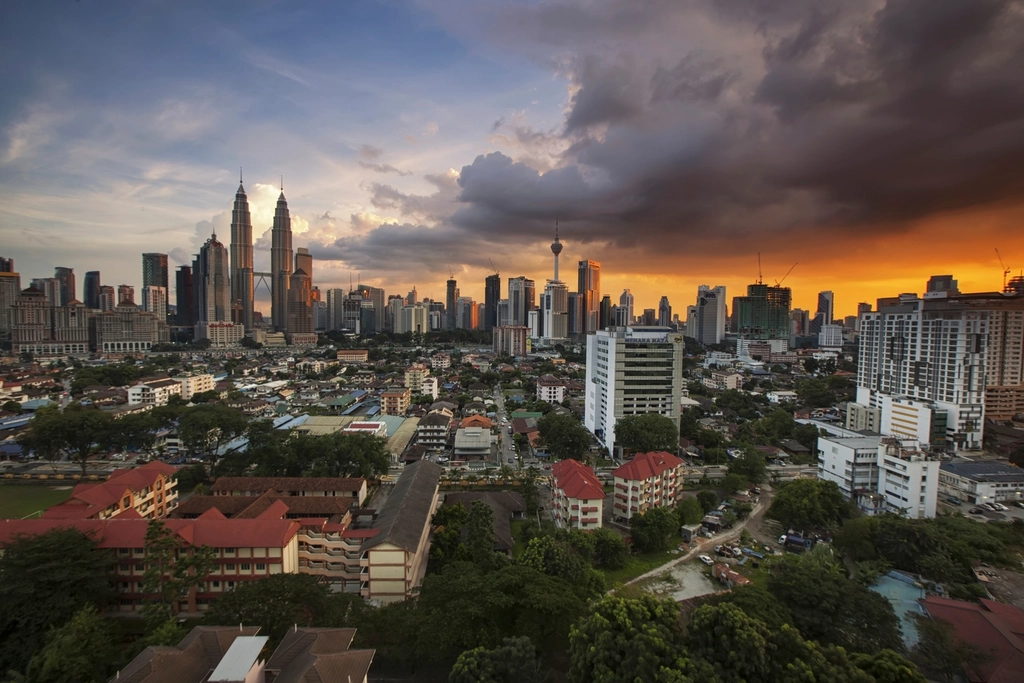
You don’t need to speak Malay to live or travel in KL — English is genuinely widespread and you can navigate almost everything in English. But learning a handful of phrases makes an enormous difference to how Malaysians respond to you. Attempting even basic Malay signals respect and interest in the culture, and people are warmly appreciative when foreigners make the effort.
Here’s the practical guide: not a full language course, but the phrases that actually come up in daily life in KL and Malaysia.
Pronunciation Basics
Malay is phonetically consistent — once you know the rules, words are pronounced as written. Key rules:
- a — like “ah” (not like “cat”)
- e — often like the “e” in “the” (schwa), or a short “eh” — context dependent
- i — like “ee”
- u — like “oo”
- c — always “ch” (like “church” — never hard like “cat”)
- g — always hard “g” (like “go” — never soft like “gem”)
- ng — like the “ng” in “singing”
- ny — like the “ny” in “canyon”
- kh — like the “ch” in Scottish “loch” (a back-of-throat sound)
Stress in Malay usually falls on the second-to-last syllable. This means: “selamat” is se-LA-mat, “terima” is te-RI-ma.
Essential Greetings
| Malay | Pronunciation | Meaning |
|---|---|---|
| Selamat pagi | se-la-mat pa-gee | Good morning (before noon) |
| Selamat tengahari | se-la-mat ten-ga-ha-ree | Good afternoon (noon–3pm) |
| Selamat petang | se-la-mat pe-tang | Good afternoon/evening (3pm–sunset) |
| Selamat malam | se-la-mat ma-lam | Good night |
| Apa khabar? | a-pa kha-bar | How are you? (formal) |
| Khabar baik | kha-bar ba-yek | I’m well (reply to above) |
| Hai / Helo | Hi / Hello | Hi / Hello (informal) |
| Selamat tinggal | se-la-mat ting-gal | Goodbye (said by the person leaving) |
| Selamat jalan | se-la-mat ja-lan | Goodbye / Safe travels (said to departing person) |
Note: In practice, most Malaysians use “Hi” and “Bye” in everyday conversation, particularly in KL. The formal Malay greetings are appreciated at more formal occasions or with older Malaysians.
Politeness Essentials
| Malay | Pronunciation | Meaning |
|---|---|---|
| Terima kasih | te-ree-ma ka-seh | Thank you |
| Sama-sama | sa-ma sa-ma | You’re welcome |
| Tolong | to-long | Please / Help |
| Maaf | ma-af | Sorry / Excuse me |
| Boleh? | bo-leh | Can I? / Is it okay? (very versatile) |
| Boleh | bo-leh | Yes / Okay / Can do (also the reply) |
| Tidak boleh | ti-dak bo-leh | Cannot / Not allowed |
| Tidak apa | ti-dak a-pa | Never mind / It’s okay / No problem |
At Restaurants and Food Stalls
| Malay | Meaning |
|---|---|
| Satu (+ dish name) + boleh? | One [dish], please? (ordering) |
| Dua, tiga, empat… | Two, three, four… (numbers) |
| Tak mau pedas | Not spicy please |
| Pedas sikit | A little spicy |
| Pedas sangat | Very spicy (warning) |
| Tak mau ais | No ice please |
| Kurang manis | Less sweet (useful for bubble tea) |
| Enak / Sedap! | Delicious! (complimenting the food) |
| Berapa harga? | How much does it cost? |
| Boleh bungkus? | Can I take away / wrap it? |
| Makan sini | Eating here (dine in) |
Getting Around
| Malay | Meaning |
|---|---|
| Di mana…? | Where is…? |
| Saya mahu pergi ke… | I want to go to… |
| Berhenti di sini | Stop here please |
| Kiri / Kanan / Terus | Left / Right / Straight ahead |
| Dekat / Jauh | Near / Far |
| Tandas di mana? | Where is the toilet? |
Shopping and Bargaining
| Malay | Meaning |
|---|---|
| Berapa? | How much? |
| Mahal sangat | Too expensive |
| Boleh kurang? | Can you reduce the price? |
| … ringgit boleh? | Can I have it for [x] ringgit? (offer) |
| Saya tidak mahu | I don’t want it (used to decline persistent sellers) |
| Tengok dulu | Just looking (useful in markets) |
Useful Everyday Words
| Malay | Meaning |
|---|---|
| Ya / Tidak | Yes / No (formal) |
| Lah | Particle added to end of sentences for emphasis (can’t quite be translated — just notice and use it) |
| Sikit | A little / A bit |
| Sangat / Banyak | Very / A lot |
| Panas / Sejuk | Hot / Cold |
| Air | Water (pronounced “ah-yer” — confusingly, NOT like the English “air”) |
| Makan | Eat / Food (verb and noun) |
| Saya | I / Me |
| Awak / Anda | You (informal / formal) |
| Nama saya… | My name is… |
Numbers
| Number | Malay | Number | Malay |
|---|---|---|---|
| 1 | Satu | 7 | Tujuh |
| 2 | Dua | 8 | Lapan |
| 3 | Tiga | 9 | Sembilan |
| 4 | Empat | 10 | Sepuluh |
| 5 | Lima | 100 | Seratus |
| 6 | Enam | 1,000 | Seribu |
Malaysian English (Manglish) — Words You’ll Hear Constantly
In KL, people switch between English, Malay, Cantonese, and Tamil constantly within a single sentence. This mixing is called Manglish. A few words and expressions come up all the time:
- Can / Cannot — used constantly instead of “yes” or “no” (“Can I see the menu?” “Can.” / “Is this spicy?” “Cannot take spicy?”)
- Lah — softening particle at end of statements (“Don’t worry lah.” “No problem lah.”)
- Lor / Mah — variations of the same — lor implies something obvious, mah adds mild reassurance
- Makan — Malay for eat/food, used constantly in English conversation (“Let’s go makan”)
- Aiyo — expression of mild distress, surprise, or frustration (borrowed from Chinese)
- Wah! — exclamation of surprise or admiration
- Confirm — used as an adverb meaning “definitely” (“Confirm will be late lah”)
- Steady lah — compliment meaning you’re capable/reliable (“You very steady lah”)
Related Reading
🇲🇾 Settle Into Malaysia
SafetyWing
Expat health insurance from USD 45/month. Cover for medical treatment in Malaysia and beyond.
Get CoveredNordVPN
Keep access to your UK accounts and streaming from Malaysia. Works reliably on local networks.
Get NordVPNSome links are affiliate links. I earn a small commission if you sign up at no extra cost to you. I only recommend things I actually use.