KL is one of the most photogenic cities in Southeast Asia, and most people miss the best of it because they only photograph what they expect to photograph. The towers, yes. The street art, sure. But the extraordinary light at 6pm hitting a weathered shophouse in Chow Kit, the geometry of the LRT tracks against the skyline, the chaos of a wet market at 7am — that’s where the real photography of KL lives.
I’m not a professional photographer — I shoot on a Sony mirrorless and, increasingly, on my phone. But I’ve spent years walking this city looking for images, and this guide is where I share the locations, the timing, and the approach that actually produces good results.
The Light in KL
Understanding KL’s light is more important than knowing which locations to visit. Kuala Lumpur sits at 3 degrees north of the equator, which means the sun rises and sets quickly, the golden hour is genuine and short (30–45 minutes), and the middle of the day is essentially a write-off for outdoor photography. Harsh overhead light, blown-out skies, deep shadows. Save the middle hours for indoor locations, air conditioning, and editing.
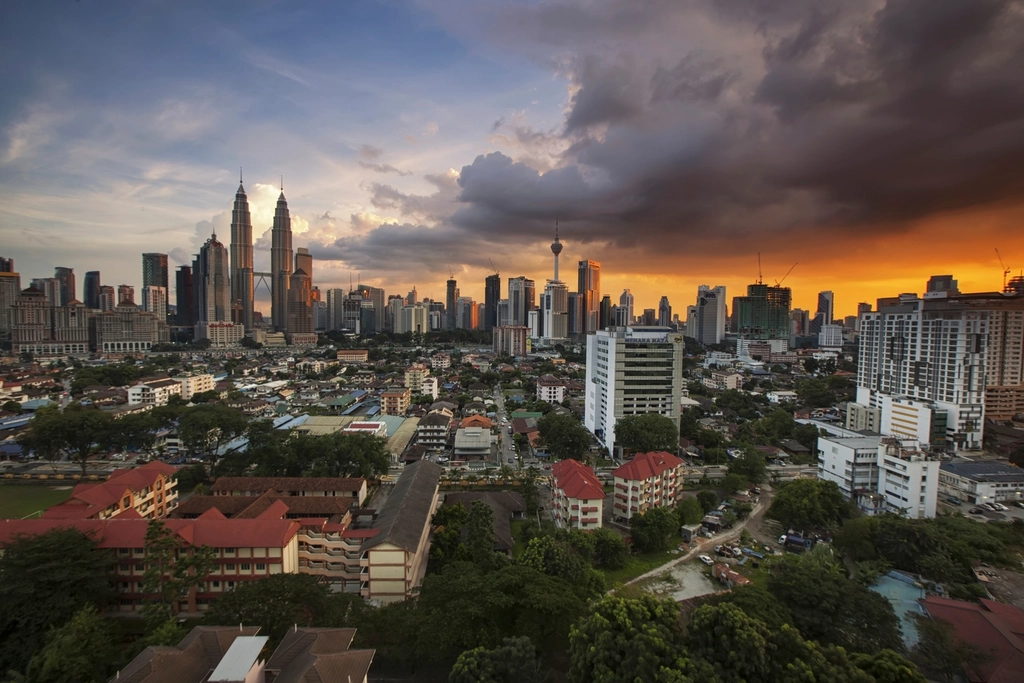
The productive shooting windows in KL are approximately 6:30–8:30am and 5:30–7:30pm. In the morning, the city is cool, the light is soft, and you share most locations with commuters and market traders rather than tourists. In the evening, the golden light hits the west-facing buildings of KLCC and the city centre perfectly, and the blue hour after sunset produces the best long-exposure cityscape conditions.
Rain is also a creative tool in KL. It rains suddenly and heavily, but the aftermath — clean-washed streets, puddle reflections, moody skies — is beautiful and ephemeral. Keep a dry bag for your gear and shoot after rain rather than packing up because of it.
Architecture and Skyline Shots
KLCC Park
The park at the base of the Petronas Towers is the classic shot, but the angles matter. The lake reflection shot works best in the early morning when the water is calm and the light is even. The telephoto compression shot — shooting the towers from a distance with a longer lens — works better from the edges of the park or from the raised walkways on the east side. Don’t just walk to the fountains and shoot upward; circle the park and find the angles that aren’t on every stock photo site.
The park is open 24 hours. The towers light up at night and the park is well-lit enough for long-exposure work. A tripod is useful but not essential with modern camera sensors.
KL Tower (Menara KL)
The telecommunications tower on Bukit Nanas is often ignored in favour of the Petronas Towers, but it’s actually more useful for photography because it offers an elevated position above the cityscape rather than being within it. The forested hill at its base — Bukit Nanas Forest Reserve, a small patch of urban rainforest — also offers interesting tree-canopy shots with the tower rising above. Go late afternoon and shoot the golden hour from the public observation area or the paid Sky Deck.
Bangsar South / Pantai Hills
For the classic “towers against the city” shot with the KLCC skyline on one side and the Bangsar South development on the other, the elevated roads around Bangsar and Pantai Hills offer angles that most photographers don’t seek out. Drive or Grab up to the UOA Bangsar development area and walk the elevated walkways. The view north toward KLCC with the expressways cutting through the foreground is striking at dusk.
Petaling Jaya Viewpoints
The western suburbs — particularly the elevated areas of Bukit Gasing and Damansara Heights — offer skyline shots of KL from a distance that compress the towers and the city into a single frame. These are best at golden hour from the west, when the late sun lights up the tower facades.
Street Photography
Chow Kit Market
KL’s largest wet market, operating from early morning until noon, is one of the most visually intense environments in the city. The covered market area — Pasar Chow Kit — has extraordinary light filtering through the corrugated roof, illuminating stalls of tropical produce, fresh fish on ice, butchered meat, and vendors who’ve worked here for decades. Shoot early (7–9am) when the market is at its busiest and the light has the right quality. Ask permission before photographing people directly — a smile and a gesture usually works across the language gap.
Petaling Street and Chinatown
The covered street market and the surrounding blocks of colonial shophouses offer strong graphic material — the red lanterns, the tarpaulin canopies, the geometry of the shophouse facades. The overhead shots from the pedestrian walkways work well. Shoot into the light rather than with it for more atmospheric images.
Masjid India / Jalan Masjid India
The Little India district around Masjid India is intensely colourful — sari shops, flower garlands, street food vendors, the mosque itself. Best during religious events and festivals but always active. The crowd density makes this street photography rather than portrait work — look for layers, colour, and light rather than individual faces.
Kampung Baru
The Malay village that survived surrounded by skyscrapers is a remarkable subject. The contrast between the traditional wooden houses and the tower blocks behind them is the obvious shot, but the street life — the morning market, the mosque activities, children playing in the lanes — is what makes this a genuinely interesting photography location rather than just an architectural curiosity. Early morning is best.
Heritage and Architecture
Kuala Lumpur Railway Station (Old KL Sentral)
The 1910 Moorish Revival railway station on Jalan Sultan Hishamuddin is one of the most beautiful colonial buildings in Southeast Asia. It’s still in use (commuter rail services run from here), so you can walk onto the platform and shoot the arched facades, minarets, and covered walkways. The building is best photographed from the road opposite in the morning light.
Sultan Abdul Samad Building
The copper-domed government building facing Merdeka Square is the most iconic colonial building in KL. The square in front (Dataran Merdeka) is where Malaysia’s independence was declared in 1957 and where major national events take place. The building photographs well from the square at golden hour. The flagpole in the foreground — one of the world’s tallest freestanding flagpoles — can be used as a compositional element or avoided depending on your angle.
The Islamic Arts Museum
Interior photography heaven. The domed ceilings, geometric tilework, and careful lighting of the permanent collection make this one of the best interior photography locations in KL. Check the museum’s policy on photography of specific exhibits — the general architecture and galleries are fair game, but some items have restrictions.
Photography Gear Notes for KL
The tropical heat and humidity affect gear differently than temperate climates. Condensation is the main risk — when moving from an air-conditioned interior to the outdoor humidity, give your camera a few minutes to acclimatise rather than shooting immediately. A UV filter protects your front element in dusty market environments. Lens cloths and a dry bag are more useful here than in many other cities.
For street work, smaller and lighter is better. A mirrorless camera with a 35mm or 50mm equivalent prime is less intimidating than a large DSLR with a zoom, and KL’s street photography subjects are often more comfortable with smaller setups. Smartphone cameras have become genuinely excellent for this work.
📸 Plan Your KL Photography Trip
Agoda
Stay centrally in KL — KLCC or Bukit Bintang for easy access to the best photography locations at golden hour.
Find HotelsNordVPN
Secure your connection when editing and backing up photos on KL’s public WiFi networks.
Get NordVPNWise
Pay for Grab rides to your shoot locations and spend in ringgit at the real exchange rate.
Open WiseSome links are affiliate links. I earn a small commission if you sign up at no extra cost to you. I only recommend things I actually use.