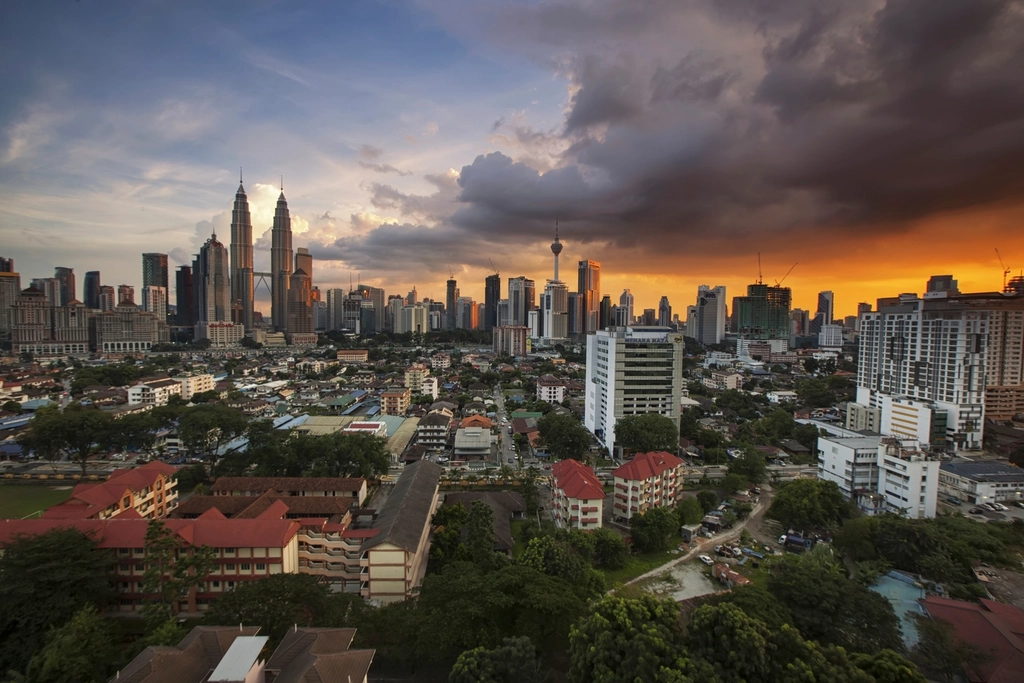
Everyone doing three days in KL ends up at the same list: Petronas Towers, Batu Caves, KLCC Park, Central Market, Chinatown, Bukit Bintang. These are all good. They’re also all in every guidebook and on every blog.
What this post is about is the KL that doesn’t show up on those lists — the places that locals go, the things that long-term residents have figured out, the slightly odd and specific spots that reward curiosity. Some of these are genuinely hidden; some are just overlooked because they’re harder to describe in a list. All of them are worth your time.
1. Chow Kit Market — The Real Working Market
Chow Kit is the most atmospheric market in KL and the least visited by tourists. It’s a large wet market and street market area in the northern part of the city centre — produce stalls, meat stalls, dried goods, textiles, and a dense concentration of migrant community businesses from Bangladesh, Myanmar, and Indonesia that gives the neighbourhood a completely different character to the rest of KL.
The wet market in the morning (before about 10am) is particularly good — fish, vegetables, live poultry, tropical fruits you won’t find in supermarkets. It’s messy, loud, and completely genuine in a way that Central Market, a short distance south, absolutely isn’t. Go early, take a camera if you’re into street photography, and eat breakfast at one of the stalls at the market’s edge.
Chow Kit is also worth walking through in the evening — the street food scene extends into the night along Jalan Chow Kit and the surrounding lanes, with a strong Malay-Muslim character that’s different from the Chinese food streets of other KL neighbourhoods.
2. Masjid India — KL’s South Asian Quarter
The area around Masjid India — a few streets east of Central Market — is KL’s South Asian commercial district, dominated by Indian and Bangladeshi shops, sari retailers, street food stalls, and a weekly Sunday night bazaar (Pasar Minggu) that extends down Jalan Masjid India and is genuinely good for cheap textiles, street food, and the experience of a packed KL market street.
The Masjid India mosque itself is a distinctive building — an unusual blue-and-white modernist structure in a neighbourhood of shophouses. The surrounding food stalls (mutton soup, roti canai, nasi lemak served on banana leaf) are among the cheapest and best in this part of the city.
3. Bangsar Sunday Morning Pasar Tani
Bangsar is well-known among KL expats, but the Sunday morning farmers’ market (pasar tani) in the carpark off Lorong Maarof is a specific weekly highlight that most visitors miss. Local farmers from around Selangor come to sell produce, plants, handicrafts, and home-cooked food. It’s on from about 7am to noon and is busiest between 8 and 10am. Good for organic vegetables, local fruits, and the sociable Sunday-morning atmosphere of KL’s most affluent neighbourhood.
4. The National Visual Arts Gallery
Ten minutes from KLCC, almost nobody goes here. The national art gallery has a permanent collection of Malaysian visual art from the colonial era to the present, supplemented by rotating exhibitions of contemporary Southeast Asian work. The building itself (a purpose-built 1990s structure) is interesting and the galleries are large. On a weekday afternoon you may have entire rooms to yourself.
The café on the ground floor is actually good — a useful post-exhibition stop in a city that doesn’t have many gallery cafés worth noting.
5. Kampung Baru — A Village Inside the City
Kampung Baru is one of the most historically significant neighbourhoods in KL and also one of the most surreal to walk through. It’s a Malay kampung (village) that exists entirely enclosed within the modern city — traditional timber houses with gardens surrounded on all sides by skyscrapers and development. The community has held their land through legal protections since the colonial era, creating an extraordinary urban anomaly where you turn a corner from a glass office tower and find yourself on a dirt lane with chickens and coconut palms.
The food here is some of the most authentic Malay cooking in the city — old-school nasi lemak, kampung-style dishes you won’t find in restaurants, kuih (traditional cakes) sold from baskets. Saturday night is particularly good: pasar malam (night market) along the main street with street food and a distinctly local atmosphere.
It’s about 15 minutes’ walk from KLCC — most visitors who know it’s there just don’t make the detour. Make the detour.
6. KL Forest Eco Park (Bukit Nanas)
The oldest protected forest reserve in Malaysia is in the middle of KL, surrounded by skyscrapers. Bukit Nanas (Pineapple Hill) is 9.37 hectares of primary rainforest right in the city centre — treetop walkways, jungle paths, monkeys, and a remarkable dissonance of city skyline through jungle canopy. Free to enter, open during the day, managed by the Forestry Department.
The KL Tower (Menara KL) sits at the top of the hill and is accessible from within the forest. Many people go directly to the tower and skip the forest entirely. The forest is better than the tower.
7. Thean Hou Temple
A large six-tiered Chinese temple on a hill in Seputeh, about 20 minutes from the city centre. Built in the 1980s by the Hakka community, it’s ornate, colourful, and busy with worshippers and tourists alike. The views from the upper levels across KL are good, particularly in the late afternoon. Chinese New Year here is spectacular — hundreds of lanterns, all-night activities, crowds that fill the entire approach road.
Not strictly “hidden” — it appears in some guides — but significantly less visited than Batu Caves and equally impressive in its way.
8. REXKL — The Cultural Centre in a Former Cinema
REX cinema on Jalan Sultan was one of KL’s most celebrated old cinemas, operating from 1947 until its closure. It’s been redeveloped into REXKL — a cultural centre with independent bookshops, art galleries, a rooftop bar, a cinema screening independent and Malaysian films, and a ground-floor food hall with more interesting options than most KL malls.
The bookshop (BookXcess occupies part of the building) is the best place to browse for English-language books in central KL. The atmosphere of the whole complex — old cinema bones with contemporary programming — is unlike anything else in the city.
9. Lake Titiwangsa at Night
Titiwangsa is the large recreational lake in the north of KL, ringed by a park that becomes genuinely lovely in the evening. The views south across the lake to the KL skyline — Petronas Towers visible, surrounding buildings lit — are among the best free city views in Malaysia. The park fills with joggers, families, and couples in the evening. Rental pedal boats on the lake are available and are very good value.
Few tourists end up here because it’s not near any major attraction and Grab prices can seem high for a park visit. Take the LRT to Titiwangsa station instead — it’s a 5-minute walk.
10. Sri Mahamariamman Temple — The Original
The Sri Mahamariamman Temple on Jalan Tun H.S. Lee in Chinatown is not hidden — it’s the oldest Hindu temple in KL, built in 1873, and it’s on the tourist maps. But most people walk past it on the way to or from Petaling Street without going inside. Go inside.
The interior is covered in intricate South Indian Dravidian sculpture — the gopuram (tower gate) alone has hundreds of figures. It’s an extraordinary piece of craftsmanship in a context (surrounded by shophouses in Chinatown) that makes it even more striking. The silver chariot stored inside the temple is taken out for the Thaipusam procession to Batu Caves — seeing it up close gives context for that procession that no photograph does.
11. Jalan Alor After Dark
This one is in the guidebooks, but the specific time matters: Jalan Alor food street in Bukit Bintang is best between 8pm and 11pm on a weekday evening, when it’s busy enough to be atmospheric but not so crowded with tourists that it becomes a scrum. Weekends can feel overwhelming. The food — barbecued seafood, Chinese clay pot dishes, fresh juices, satay — is excellent and very cheap by any international standard.
Most visitors eat at the first stalls they reach. Walk to the far end of the street and come back — the quality is distributed and the stalls further in tend to be slightly less touristic.
12. Desa Park City — KL’s Most Liveable Neighbourhood
Desa Park City is a master-planned township in northwest KL built around a large lake — jogging paths, parks, weekend markets, and an unusually pleasant street-level experience by KL standards. It’s primarily residential but has a central “the Walk” area with cafés, restaurants, and shops. The Sunday morning farmers’ market is the best in KL for a relaxed weekend breakfast.
Most tourists never hear of it because there’s nothing specifically “to see” — it’s just a pleasant place to be. For expats considering where to live, Desa Park City is consistently popular for good reasons.
🗺️ Getting Around KL’s Hidden Spots
Wise
Pay at hawker stalls and markets without paying conversion fees. The Wise card works everywhere in KL.
Open WiseAgoda
Find a hotel near the neighbourhoods you want to explore — staying central makes it much easier to hit these spots.
Find HotelsSafetyWing
Comprehensive travel and expat health insurance — so you can explore freely without worrying about what happens if something goes wrong.
Get CoveredSome links are affiliate links. I earn a small commission if you sign up at no extra cost to you. I only recommend things I actually use.