Johor Bahru has a reputation problem. Ask anyone in KL about JB and you’ll get a mixed response — “good food”, “great for shopping”, “bit rough around the edges”, “the causeway queue is a nightmare.” All of these things are true. What gets less attention is that JB is also one of the fastest-developing cities in Malaysia, has some of the cheapest urban costs anywhere in the region, and is positioned directly across a narrow strait from Singapore — a city with some of the highest incomes and one of the highest costs of living in the world.
Prices checked August 2026. Everything here is what I actually paid or was actually quoted, in ringgit, in Kuala Lumpur. Malaysia moves fast — check before you commit to anything.
That proximity to Singapore changes everything about JB. It’s not just a Malaysian city — it’s a satellite of a global financial centre, and that shapes the economy, the property market, the residents, and the ambitions of the place in ways that make it unlike anywhere else in Malaysia.
This is the guide for people considering JB as a base — whether you’re a digital nomad who wants Singapore access at Malaysian prices, an expat whose work takes you between both countries, or just someone curious about whether JB works as an alternative to KL.
JB vs Singapore: The Numbers That Matter
The Malaysian ringgit to Singapore dollar exchange rate is the defining fact of life in JB. As of 2026, roughly RM3.3 buys SGD1. This means:
- A meal that costs SGD15 in Singapore costs the equivalent of RM8–12 in JB
- A 1-bedroom apartment that costs SGD2,500/month in Singapore costs RM1,500–2,500 in JB
- Petrol in Malaysia is heavily subsidised — filling a tank in JB costs a fraction of Singapore prices (which is why so many Singaporean-registered cars cross the causeway to refuel)
For people earning in Singapore dollars, living in JB is a significant arbitrage play. Many Singaporeans and Singapore-based expats live in JB and commute across the Johor-Singapore Causeway (or the Second Link / Tuas Checkpoint) daily. It’s estimated that over 300,000 people make this cross-border commute every day.
Getting Between JB and Singapore
The Johor-Singapore Causeway (Checkpoint Woodlands)
The main crossing — 1,056 metres of causeway connecting JB Sentral station on the Malaysian side to Woodlands in Singapore. The most convenient crossing if you’re heading to the north of Singapore or connecting to the MRT network.
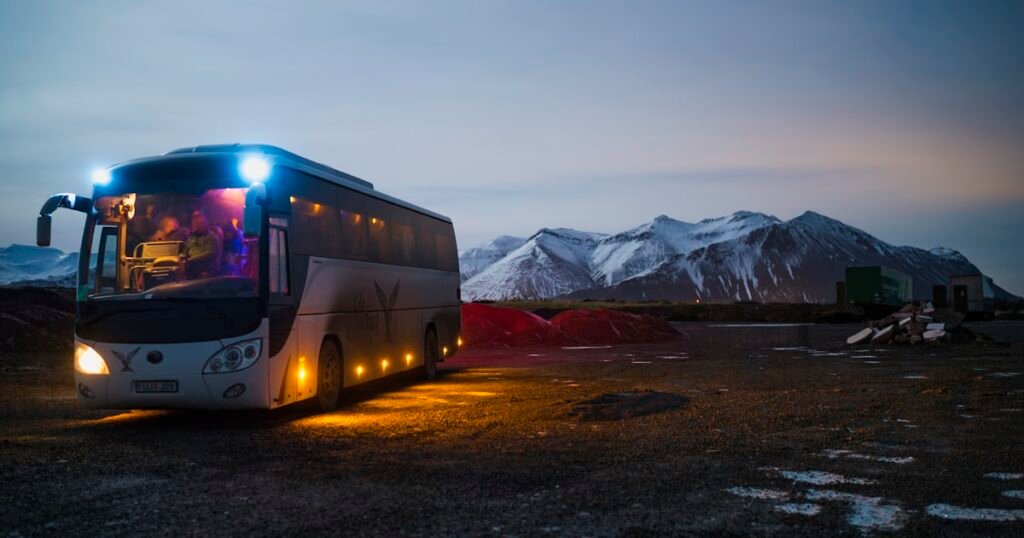
The commute by bus (various operators, RM2.50–5 from JB Sentral to Woodlands) is the cheapest option but is subject to significant queue times — particularly Monday–Friday mornings into Singapore and Friday evenings heading back to JB. During peak periods, the causeway can add 1–2 hours to what is a 5-minute drive.
The KTM Shuttle Tebrau train runs between JB Sentral and Woodlands CIQ on the Singapore side — slightly faster than the bus at peak times but doesn’t have a direct onward Singapore transit connection (you need to transfer to a feeder bus to Woodlands MRT).
The Johor Bahru-Singapore Rapid Transit System (RTS Link) is a cross-border rail link under construction as of 2026 that will connect JB Sentral directly to Bukit Chagar station in Singapore, from which you’ll be able to join the Singapore MRT. This project has been long delayed but construction is underway — it would fundamentally change the commuter dynamic when operational.
The Second Link (Tuas Checkpoint)
A second crossing to western Singapore — useful if you have a car and are heading to Tuas, Jurong, or the western industrial areas. Also tends to have shorter queues than the causeway, though it’s less convenient for most destinations.
Where to Live in JB
Medini (Iskandar Puteri)
The newest and most modern area — purpose-built development in Iskandar Malaysia, the southern economic development zone. Medini has Legoland Malaysia, a Gleneagles hospital, modern condominiums, and English-signposted retail. Very international feeling, very clean, somewhat soulless in the way that new planned developments often are. Good for families and for people who want predictability over character.
Bukit Indah
A popular residential area in southern JB with AEON Mall, established amenities, international schools (including Raffles American School and others), and a mix of condos and landed houses. More established than Medini and better for families with school-age children. Very Singapore-facing in character.
Austin Perdana / Mount Austin
One of the largest and fastest-growing residential areas in JB, with a huge range of property types and prices. More local in character than Bukit Indah — significant local Malay and Chinese community alongside expat residents. Good food options (Austin Perdana’s food scene is genuinely good), reasonable property prices.
JB City Centre / Danga Bay
For people who want urban density and waterfront — the city centre has older apartments and newer developments along the Johor Strait, with views across to Singapore’s Jurong Island. The character here is much more authentically Malaysian city than the newer southern areas.
Cost of Living in JB
JB is significantly cheaper than KL, and dramatically cheaper than Singapore:
- 1-bedroom condo (modern, with pool): RM1,200–2,500/month
- 2-bedroom condo: RM1,800–3,500/month
- Landed house (3-bedroom): RM2,500–5,000/month
- Hawker meal: RM5–12
- Groceries (monthly): RM600–1,000 for a couple
- Utilities (electricity, water, internet): RM300–600/month
Total comfortable living costs for a single person: RM3,000–5,000/month. For a couple: RM5,000–8,000/month. These figures are significantly lower than KL’s mid-range equivalent, and the price gap with Singapore is enormous.
International Schools in JB
JB has developed a solid international school infrastructure to serve its cross-border commuter families and expatriate community:
- Raffles American School — American curriculum, well-established
- Marlborough College Malaysia — British curriculum in Iskandar Puteri, boarding and day pupils, high reputation
- Crescendo International College — multiple curricula
- GEMS World Academy JB — IB curriculum
- Legoland-adjacent kindergartens — several options in the Medini area for young children
The international school landscape in JB is smaller than KL’s but adequate for most families, and the price differential vs Singapore makes it financially significant for Singapore-based families.
JB’s Food Scene
JB food is a legitimate culinary reason to visit. The city has its own distinctive food culture — a mix of Malay, Chinese (particularly Teochew and Hakka), and Indian traditions that differs subtly from KL’s. Specific JB specialities:
JB laksa — spicier and different from KL or Penang versions. Try it at the old stalls in the city centre market area.
Muar dishes — the nearby Muar district’s food has its own reputation; many stalls in JB serve Muar-style mee bandung and otak-otak (grilled fish cake in banana leaf) that you won’t find done the same way in KL.
Teochew food — JB’s large Teochew Chinese community means excellent braised pork, porridge, and seafood done in the Chaozhou tradition.
The night markets — JB’s pasar malam circuit is excellent. Hang Tuah and Pelangi are well-known; explore the residential area night markets for less touristy options.
The Honest Downsides of JB
Transparency requires covering what puts people off:
Traffic and the causeway queue. If you’re commuting to Singapore daily, the causeway is your dominant practical reality. On a bad day — Friday afternoon, Malaysian public holidays when Singaporeans pour into JB, Singapore school holidays — the queue can be 2–3 hours each way. Many JB-Singapore commuters have deeply ambivalent feelings about this.
Crime reputation. JB had a serious crime problem in the 2000s and early 2010s. It has improved significantly, but the reputation persists and some caution (particularly about bag-snatching and car-related crime) remains warranted. Stick to well-lit areas after dark, don’t leave valuables visible in parked cars, and exercise the same urban awareness you would in any large city.
Infrastructure gaps. Outside the modern developments, JB has infrastructure challenges — roads that flood in heavy rain, inconsistent utilities, and public transport that’s much less developed than KL’s. If you don’t have a car, daily life in JB is difficult. This is changing slowly, but in 2026 it remains true.
Less cosmopolitan character than KL. JB doesn’t have the cultural density, restaurant variety, or international events calendar of KL. If you want world-class dining, arts and music scenes, or the kind of urban stimulation that a major capital provides, JB doesn’t fully scratch that itch. Singapore is the fix, but that requires crossing the border.
Who Is JB Right For?
Based on everything above, JB makes most sense for:
- People working in Singapore who want to dramatically reduce their housing costs
- Families with children in international schools, where the cost saving vs Singapore is enormous
- Digital nomads earning in strong currencies who want the cheapest urban base in the region
- Retirees under MM2H who want Malaysian costs with Singapore weekend access
- People who genuinely enjoy the borderland, cross-cultural atmosphere of a city that exists partly as a satellite of a global city
It’s not right for people who want KL’s cultural depth, or who need minimal commuting friction to a Singapore workplace, or who find the city’s rawness difficult to manage day to day.
Getting There from KL
KL to JB is about 350km — roughly 4 hours by road (or more with traffic at the causeway end), 5–6 hours by bus, or about 30 minutes by flight. The direct KTM train from KL Sentral to JB Sentral takes about 4.5–5 hours. Flying (Air Asia or MalindoAir/Batik Air from KLIA2) is the fastest option if you’re making a trip rather than commuting.
🇲🇾 Living in Malaysia Essentials
Wise
The best way to manage money between ringgit and Singapore dollars. Essential for JB-Singapore commuters.
Open WiseBooking.com
Find accommodation in JB for an exploratory trip before committing to a move. Good selection across all budgets.
Find HotelsSafetyWing
Expat health insurance that covers you in Malaysia — crucial when you’re living in JB and need reliable private healthcare access.
Get CoveredSome links are affiliate links. I earn a small commission if you sign up at no extra cost to you. I only recommend things I actually use.