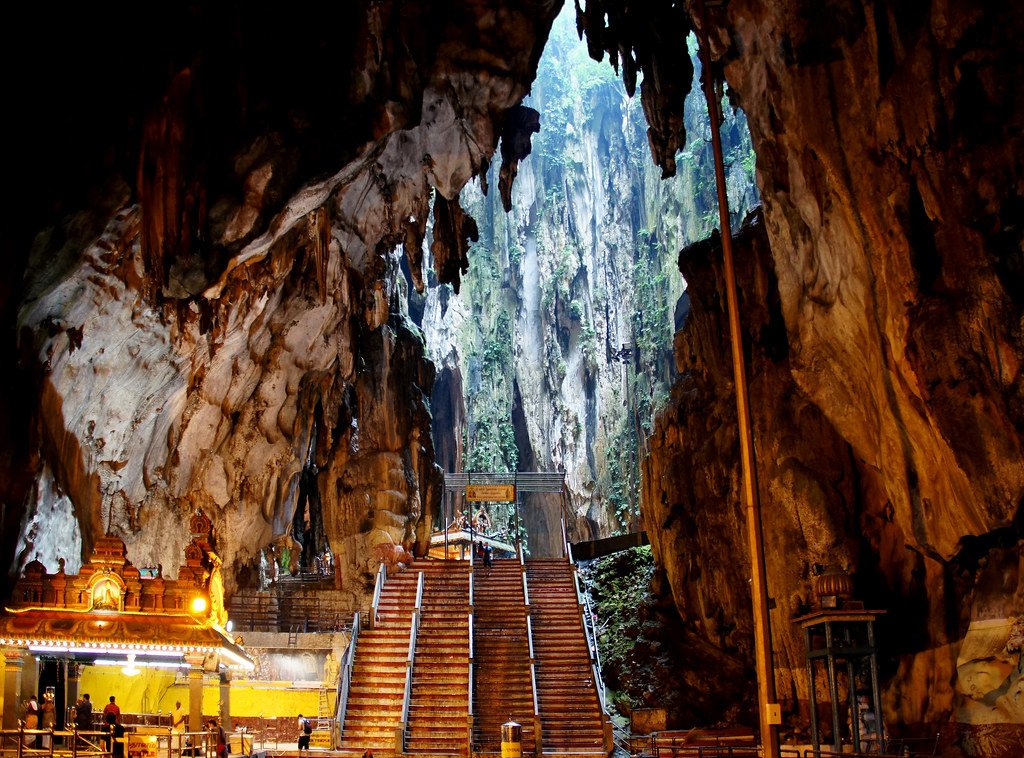
Thaipusam at Batu Caves is one of the most viscerally extraordinary religious events I have ever witnessed. Over one million Hindu devotees converge on the limestone hills north of Kuala Lumpur over three days in January or February (the date shifts each year by the Tamil lunar calendar). Devotees carry kavadi — elaborate metal frameworks, some pierced through their skin with skewers and hooks — up the 272-step staircase to the cave temple at the top. The atmosphere is indescribable: equal parts festival, pilgrimage, and collective spiritual experience.
If you’re in KL during Thaipusam, go. This guide tells you everything you need to know.
What Is Thaipusam?
Thaipusam is a Tamil Hindu festival celebrated during the Tamil month of Thai (January–February), on the full moon day. It honours Lord Murugan — the son of Shiva, the god of war and victory, depicted riding a peacock and carrying a vel (divine spear). The festival commemorates the occasion when the goddess Parvati gave Murugan a spear to defeat the demon Soorapadman.
Devotees who have made vows to Lord Murugan (for healing, answered prayers, or as acts of thanksgiving) fulfil those vows by carrying kavadi on this day. The kavadi ranges from simple offerings of milk (carried in a clay pot balanced on the head) to elaborate silver-and-peacock-feather structures weighing 30–40kg, attached to the body via metal skewers pierced through the cheeks, tongue, and torso.
The act of piercing and carrying kavadi is not considered to be about pain — devotees enter a state of religious trance, and many report feeling no pain during the process. Priests, family members, and fellow devotees chant and play drums to maintain the devotional state. The devotee often appears calm, even joyful, throughout.
Where Does Thaipusam Happen in Malaysia?
Thaipusam is celebrated at Tamil Hindu temples throughout Malaysia, but the Batu Caves celebration is the largest in the world outside India. Other significant celebrations happen in Penang (at Waterfall Hill Temple / Kovil Veedu, with its own procession and steps), in Ipoh (at Kallumalai temple), and at Sri Subramaniar Swamy Temple in Seremban.
The KL celebration begins with a procession from Sri Mahamariamman Temple in Chinatown (Jalan Bandar) — a silver chariot carrying the statue of Lord Murugan travels by night from the city temple to Batu Caves, pulled by devotees and accompanied by a vast procession of thousands. The chariot procession departs the evening before the main festival day and arrives at Batu Caves in the early hours of the morning.
What to Expect at Batu Caves
The scale is the first thing that hits you. The approach road to Batu Caves is lined for kilometres with stalls, vendors, music, chanting — a river of colour and sound. Devotees in yellow (Lord Murugan’s colour) carry kavadi of all sizes. Families accompany their relatives who have made vows. Drums beat continuously. The air smells of incense, jasmine garlands, and camphor.
The 272 steps are congested during peak hours — the main day sees the greatest crowds in the morning. Kavadi carriers ascend the stairs while drummers and family members accompany them, maintaining the trance state. At the top, in the main cave, priests receive the kavadi offerings and the devotees complete their vows.
On the main festival day (and the day before, during the chariot procession), the area around Batu Caves is at maximum capacity. The LRT/MRT is packed, the roads are gridlocked, and the crowd at the temple is enormous. This is not a reason to avoid it — it is exactly the experience — but it does require planning.
Practical Guide: When and How to Visit
When to Go
The festival runs for three days. The most dramatic events:
Night of Day 1 (chariot procession): The silver chariot departs Sri Mahamariamman Temple in Chinatown after 8pm and arrives at Batu Caves in the early hours. If you want to see the procession itself (which passes through the streets of KL en route to Batu Caves), position yourself along Jalan Pudu or the route to Ampang. The streets are lined with crowds and the atmosphere is electric.
Main festival day (Day 2): This is the main kavadi day. The most intense crowds are from 6am–2pm. Going very early (before 6am) or in the afternoon gives a slightly less crushing crowd experience. Night-time visits on the main day have a different, magical quality — the cave is lit, the crowd has thinned slightly, and the devotional atmosphere continues.
Day 3: The return procession brings the deity back to the city temple. Smaller crowds, still atmospheric.
How to Get There
Take the MRT to Batu Caves station (the Putrajaya Line / Batu Caves branch). Do not attempt to drive — parking is impossible on festival days, and the roads are closed or gridlocked for hours in each direction. Trains run extended hours during Thaipusam. Expect extremely packed trains going to Batu Caves in the morning and returning in the afternoon — be patient and persistent.
The walk from Batu Caves MRT station to the temple steps is about 10 minutes, through the vendor stalls and festival area. You won’t be able to miss it — just follow the flow of yellow.
What to Wear
Wear modest, comfortable clothing you don’t mind getting very hot and sweaty. Remove shoes before entering the cave area (shoe storage is provided at the base of the steps). Yellow is the festival colour — wearing yellow is welcomed but not required. Closed-toe shoes (or sandals with straps) are better than flip-flops for the steps.
Photography
Photography of the festival, the procession, the kavadi carriers, and the crowds is generally accepted and even welcomed — many devotees and their families are proud of the ceremony and happy to be photographed. However:
Be sensitive when photographing the piercing ceremony itself. Ask permission where possible. Don’t use flash close to devotees in trance states. Give priority of movement to kavadi carriers and their entourages on the steps. Don’t block pathways to get a shot.
For photography, the chariot procession in the streets of KL at night offers dramatic shots without the extreme crowd density of the cave itself. The steps are also spectacular — kavadi carriers ascending in the golden morning light, drummers alongside them, is one of the great visual spectacles of Southeast Asia.
What Dates Is Thaipusam in 2025 and 2026?
Thaipusam falls on the full moon in the Tamil month of Thai. Recent and upcoming dates:
2025: 11 February (main festival day). Public holiday in Kuala Lumpur and Selangor.
2026: 31 January (main festival day). Public holiday in Kuala Lumpur and Selangor.
2027: 20 January.
Note: Thaipusam is a public holiday in KL and Selangor but not all Malaysian states. If you’re travelling from another state to see it, it’s a normal working day there.
Is It Safe and Respectful to Attend as a Non-Hindu Visitor?
Yes, completely. Thaipusam at Batu Caves is attended by thousands of non-Hindu visitors each year — tourists, expats, local Malaysians of all ethnicities and religions — and visitors are genuinely welcomed. The Hindu community takes pride in sharing this celebration.
The main courtesies: remove shoes, dress modestly, give way to kavadi carriers, be respectful of active worship, ask before photographing people closely. Beyond that, you’re free to observe, explore, and experience everything the festival offers.
The experience is loud, crowded, hot, and extraordinary. Go with a spirit of open curiosity and you’ll find it one of the most memorable days of your time in Malaysia.
Plan Your Malaysia Trip
Managing money between the UK and Malaysia is much easier with Wise — real exchange rates, low fees, and a multi-currency account you can top up and spend from anywhere.
If you’re visiting Malaysia for Thaipusam or living here as an expat, SafetyWing’s Nomad Insurance gives you affordable travel health cover that works across Southeast Asia.
For festival visits, book accommodation in KL’s city centre — easy MRT access to Batu Caves, and close to the chariot procession route through Chinatown. Agoda has great KL deals.
Some links are affiliate links. I earn a small commission if you sign up at no extra cost to you. I only recommend things I actually use.