Malaysia has developed one of the most vibrant street art scenes in Southeast Asia over the past decade. Penang’s Georgetown transformed itself into a world-famous open-air gallery starting from the 2012 George Town Festival, when Lithuanian artist Ernest Zacharevic installed his iconic wire sculpture and mural series. KL followed, and now both cities have extensive street art trails that draw visitors specifically seeking out murals, installations, and painted walls.
This guide covers the best street art in both KL and Penang, with practical information on finding the best pieces and exploring each area.
Georgetown, Penang: The Street Art Capital
Georgetown’s street art scene started with Ernest Zacharevic’s 2012 murals commissioned for the George Town Festival. His work — including the famous “Children on Bicycle” and “Little Children on a Chair” — used walls as a canvas in a way that integrated with the architecture and the street. Other artists followed, and the city’s heritage UNESCO zone became dotted with murals of exceptional quality.
The Famous Ernest Zacharevic Murals
Children on Bicycle (Lebuh Armenian): A boy and girl on an actual bicycle attached to the wall, with a painted figure riding behind. This is the most photographed piece in Penang.
Little Children on a Chair (Lebuh Armenian): Two children sitting on a real chair attached to a wall, with painted shadows and details extending onto the brick.
Indian Muslim Man Watching TV: A photorealistic figure watching a television — complete with real TV aerial inserted into the wall.
Boy on a Motorbike (Lebuh Chulia): A painted boy on a real vintage motorcycle leaning against a heritage shophouse wall.
Zacharevic’s originals are the most-visited, but they need to be sought out — not all are obvious from main streets, and some have faded or been modified over the years. A free map from the Penang Global Tourism office (on Lebuh Bishop) marks all the major art locations.
Iron Caricature Sculptures
Alongside the murals, Georgetown also has a series of over 50 iron caricature signs — flat steel cut-outs depicting scenes from Georgetown’s history and character, installed on buildings around the old quarter. These are charming, educational, and far more durable than painted murals. The full set forms a walking trail of its own.
Georgetown Street Art Walking Route
The core street art area is concentrated in the UNESCO heritage zone — roughly between Lebuh Armenian, Lebuh Ah Quee, Lorong Pasar, and Lebuh Chulia. This is a walkable area (about 1.5km across) and can be explored in 2–3 hours on foot. The area is most pleasant in the early morning before heat and crowds build — the light is better for photography and the streets are quieter.
KL Street Art: Where to Find It
KL’s street art scene is more dispersed than Georgetown’s but has excellent pieces across several neighbourhoods.
Chinatown / Petaling Street
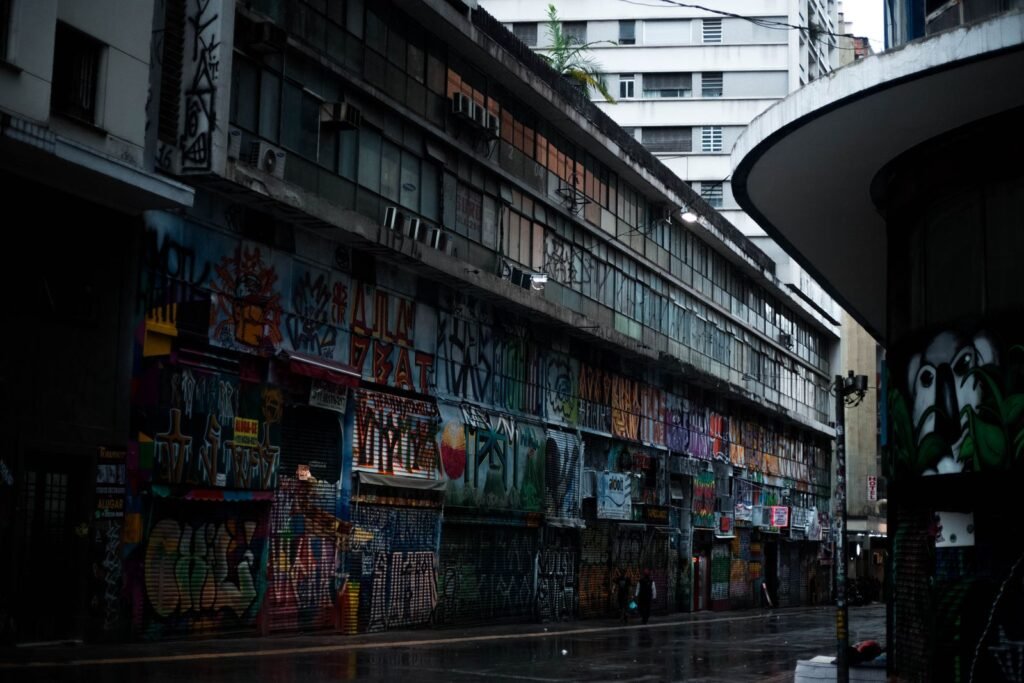
KL’s Chinatown has accumulated street art on the alleyways and shophouse walls around Jalan Petaling and the surrounding streets. Lorong Panggong and the lanes running off Jalan Sultan have some of the most interesting pieces — a mix of commissioned murals, independently placed work, and heritage-inspired graphics. The area near the Kuala Lumpur City Gallery on Dataran Merdeka also has murals and public art.
Brickfields (Little India)
Brickfields has several large colourful murals depicting Indian cultural scenes, Hindu iconography, and the community’s history. The murals are particularly concentrated around the main streets and the covered walkways. Vivid, large-scale work makes this a rewarding area to walk through even beyond the murals.
Sentul
Sentul West, once an industrial suburb, has been redeveloped into a creative arts hub. The Sentul Depot and surrounding streets have commissioned street art of high quality — KL’s answer to a dedicated arts quarter. The area is worth the trip for street art enthusiasts.
Chow Kit
The Chow Kit market area and surrounding streets have murals that reflect the neighbourhood’s working-class character and multicultural history. Less curated than Georgetown but authentic and interesting.
Bukit Bintang and Surrounding Areas
The alleys off Jalan Alor and around Changkat Bukit Bintang have accumulated a range of street art over the years, mixed in with the bars and restaurants. Quality varies but there are some notable pieces.
Photography Tips for Street Art
The best light for photographing murals in Malaysia is early morning (7–9am) when shadows are long and the light is warm, or in overcast conditions when the diffuse light eliminates harsh shadows and allows even exposure across the full mural. Midday tropical sun is the worst time — washed-out colours and harsh shadows.
Many of the interactive Zacharevic murals in Penang are designed to be photographed with a person “completing” the scene — the bicycle really has someone riding it, the chair really has someone sitting on it. Queue politely (many pieces have informal queues of people waiting for their photo) and make the most of the interactive element.
Explore Malaysia’s Art Scene
Stay in Georgetown’s heritage zone to explore Penang’s street art on foot from your hotel. Agoda has excellent rates for Georgetown boutique hotels and heritage guesthouses.
Find Georgetown Hotels →Planning a Penang art trip from KL? Booking.com has good options across all budgets in Georgetown, plus free cancellation on most properties.
Book Penang Hotels →Spend in ringgit across Malaysia with no conversion fees — restaurants, transport, tours and market buys all add up and the savings with Wise are significant over a trip.
Get Wise →Some links are affiliate links. I earn a small commission if you sign up at no extra cost to you. I only recommend things I actually use.