Your first week in Kuala Lumpur is going to be a mix of genuine delight and mild overwhelm. The food will be better than you expected. The heat will hit you harder than you thought. Getting around will be more straightforward than people warned you. And you will probably spend at least one evening eating laksa on a plastic stool feeling like you made a very good decision.
Prices checked August 2026. Everything here is what I actually paid or was actually quoted, in ringgit, in Kuala Lumpur. Malaysia moves fast — check before you commit to anything.
Here is what to actually do that first week, in roughly the right order.
Day 1: Landing and Arriving
Get your SIM card at the airport
Do not leave KLIA without a Malaysian SIM. The operator booths are in the arrivals hall before you exit — Maxis, Celcom/Digi, U Mobile. Grab a prepaid unlimited plan for RM 40-50. You will need data immediately for Grab (the taxi app), Google Maps, and sorting your first accommodation. Full guide: Malaysian SIM Card Guide.
Get from the airport to KL
You have three options: KLIA Ekspres (express train to KL Sentral, 28 minutes, RM 55), Grab car (budget RM 80-150 depending on traffic and time), or airport bus (cheapest, around RM 12, but takes longer and stops multiple times). If you have luggage, KLIA Ekspres is the cleanest option — it deposits you at KL Sentral which is central for trains, LRT, and the monorail.
Set up Grab
Download Grab before you fly if you can. It is essential for getting around KL and is essentially how you take a taxi here. You can pay by card in-app so you do not need cash from the airport. Set it up with your UK number while you still have it, then add your Malaysian number later.
Your first meal
Find the nearest mamak (Indian-Muslim restaurant, identifiable by the roti canai and teh tarik on the menu, open 24 hours). Order roti canai with dhal. RM 2. This is your introduction to Malaysian food. You are welcome.
Day 2-3: Getting Set Up
Sort your money situation
If you have a Wise card, it should already work at Malaysian ATMs and card machines. If not, set one up now — it will be your cheapest way to spend in Ringgit without a Malaysian bank account. Withdraw some cash (RM 200-300) because some smaller hawker stalls and markets are still cash-only.
Get a Touch ‘n Go card
From any 7-Eleven, MyNews, or convenience store. This card tops up for use on the LRT/MRT (public transport), toll booths (if you drive), and increasingly for small purchases at markets and parking. Get one immediately — you cannot tap a credit card on KL’s public transport system, only Touch ‘n Go.
Alternatively: the Touch ‘n Go e-Wallet app can be linked to the card but also works as a digital payment on most public transport. Both work.
Walk your neighbourhood
Before you take the LRT anywhere or book a Grab, spend half a day walking wherever you are staying. This is how you find your local hawker centre, the nearest convenience store, the pharmacy, the laundry place. KL is very walkable within neighbourhoods even if it is not walkable between them. Get your bearings at ground level first.
Day 3-4: Explore the City
Get on the LRT and MRT
Buy a touch ‘n go card (or use the app) and take the LRT from wherever you are to KLCC or Bukit Bintang. This teaches you how the system works and deposits you at the most useful central points. Full transport guide: Getting Around KL.
Go to a hawker centre for dinner
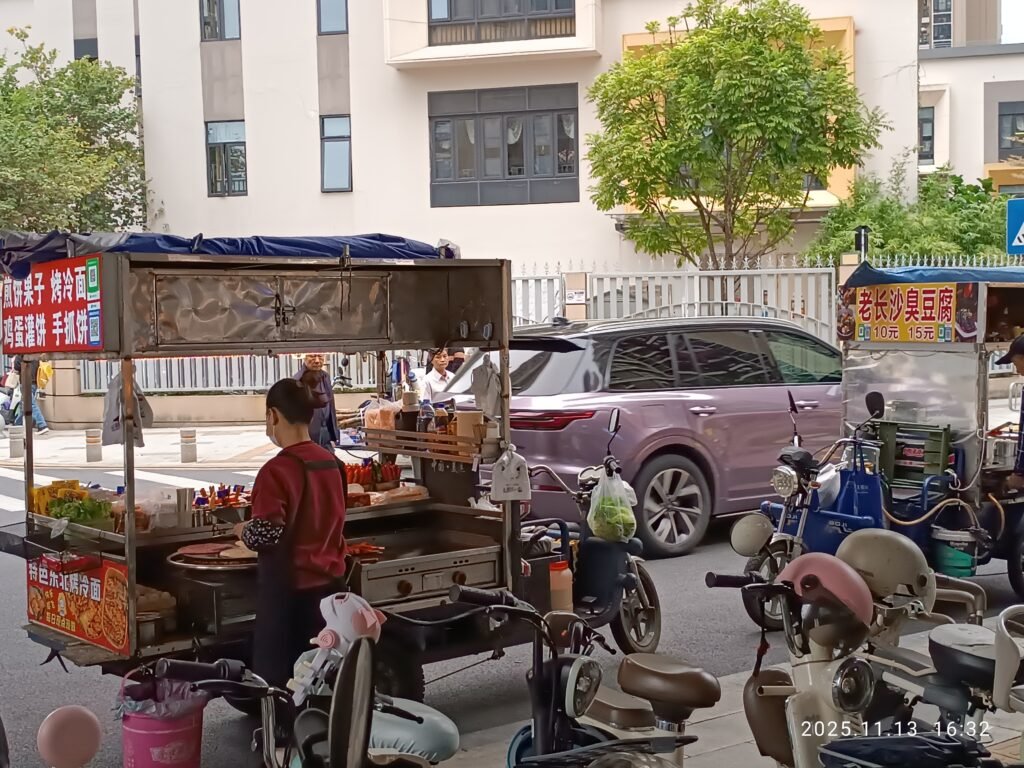
Not a restaurant. A hawker centre — the open-air or semi-covered food stall complexes that exist in every neighbourhood. Jalan Alor (Bukit Bintang) is the tourist-friendly option. The Chow Kit morning market is more local. Your accommodation can recommend the nearest decent one. Budget RM 8-15 for a full meal.
See the Petronas Towers at night
Even if you are not a tourist, go to KLCC Park at night in your first week. The towers lit up at night are genuinely impressive and you will feel like you are really here. It is free to stand in the park. The fountain shows run in the evenings. Take your time.
Day 4-5: Practical Admin
Get health insurance sorted if you haven’t
This should ideally be done before you land, but if not — sort it now. KL’s private hospitals are excellent but a hospital visit without insurance is expensive. SafetyWing is the most popular option for expats and digital nomads — you can sign up online and be covered the same day. Full guide: Health Insurance for Expats in Malaysia.
Open a bank account (if you have the right visa)
If you are on an Employment Pass, DE Rantau pass, or other long-term visa, week one is a good time to open your Malaysian bank account. Take your passport and visa to a central Maybank or CIMB branch. Allow 2 hours including waiting time. Full guide: How to Open a Bank Account in Malaysia.
Find your nearest wet market or supermarket
For groceries, you have options at very different price points: the local wet market (very cheap, very fresh, cash only, in the morning only), mid-range supermarkets like Jaya Grocer or Village Grocer (better range, card payments, higher prices), and imported goods at Cold Storage or Ben’s General Store (priciest, but where you get British products if homesickness strikes).
Day 6-7: Settling In
Find your regular spots
By day 5-6, you should start having a regular hawker centre, a regular cafe, a regular Grab pickup spot. This is normal and good — KL rewards the people who find their spots and return to them. Regulars get slightly bigger portions and slightly warmer smiles at hawker stalls.
Set up mobile internet properly
If your accommodation has broadband, great. If you are in a serviced apartment or Airbnb where it is included, great. If you need your own connection, look at getting Unifi or TIME home fibre set up — takes 3-7 working days for installation. In the meantime, your mobile data hotspot will carry you.
Explore a neighbourhood properly
Pick one neighbourhood you have not been to — Bangsar, Chow Kit, Chinatown, Bukit Bintang — and spend half a day there on foot. Eat something, sit somewhere, walk around. KL reveals itself through this kind of slow exploration. Guide: Best Neighbourhoods in KL.
Things People Worry About That Are Fine
- The heat — yes it is hot, you will adjust within a week. Drink more water than you think you need. Move between air-conditioned spaces in the middle of the day. You are not going to melt.
- The food — Malaysian food is almost universally excellent and very unlikely to make you sick if you eat at busy hawker stalls (high turnover = fresh food). Eat where the locals eat.
- Getting lost — Google Maps works brilliantly in KL. You will not get lost for long.
- Safety — KL is genuinely safe. Normal city awareness applies. Do not leave your phone on the table at outdoor cafes (phone snatching from the street happens). Otherwise it is fine.
- English — everyone speaks English. You will not struggle to communicate.
Things People Do Not Worry About That They Should
- Sun exposure — the equatorial sun is strong. If you are pale, wear sunscreen if you are spending time outside between 10am and 3pm.
- Haze season — between August and October, regional fires (mainly in Sumatra) create haze that affects air quality across Malaysia. The API (air pollution index) app is worth having. On bad haze days, limit outdoor time and wear a mask if you are sensitive.
- Humidity on electronics — your laptop and phone will be fine but be aware of condensation if you take something from a very cold air-conditioned room into hot humid outdoor air.
Budget for Your First Week
Rough numbers for a comfortable first week in KL:
| Item | Est. Cost (MYR) |
|---|---|
| KLIA Ekspres airport train | RM 55 |
| SIM card with monthly plan | RM 40-50 |
| Touch ‘n Go card + credit | RM 30-50 |
| Food (hawker meals, RM 8-15 each) | RM 300-400 |
| Grab rides | RM 100-150 |
| Coffees and incidentals | RM 100-150 |
| Total (excluding accommodation) | RM 625-805 |
That is roughly GBP 110-145 for your first week’s running costs, not including where you are sleeping. Not bad for a new city.
Get These Sorted Before You Land
Wise — Spend in MYR Instantly
Real exchange rates from day one. Works at all Malaysian ATMs and card machines before you open a bank account.
SafetyWing — Health Cover
Sign up online and be covered the same day. Do not arrive in a new country without health insurance.
NordVPN — Keep UK Access
UK catch-up TV, UK banking, streaming — keep everything working from Malaysia.
Some links are affiliate links. I earn a small commission at no extra cost to you. I only recommend things I actually use.
Related Reading
And if week one starts at immigration, read this before you fill anything in online.