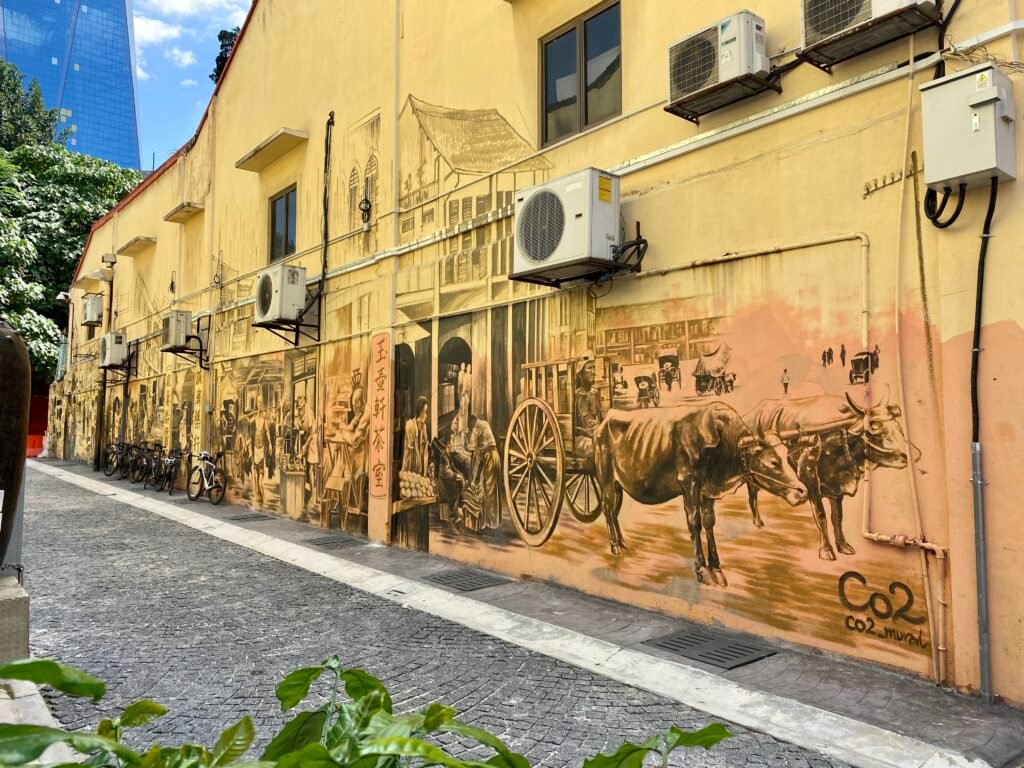
Petaling Street is where KL started. The old Chinatown — a cramped grid of shophouses, covered market stalls, street food, temples, and general organised chaos — sits just south of the river confluence where the city was founded in 1857 by tin miners seeking their fortune. Two thirds of those original miners were Cantonese, and Cantonese culture still runs through Chinatown today, even as the neighbourhood has evolved into something more multilayered.
It’s touristy. I’m not going to pretend otherwise. Petaling Street has been a tourist draw for decades and the vendors know it. But it’s also genuinely atmospheric, genuinely good for food, and has more going on than the main covered market strip suggests. This guide covers all of it.
Getting to Petaling Street
The easiest options:
LRT: Pasar Seni station on the Kelana Jaya line, a short walk from the northern entrance to the Petaling Street market.
Grab: Drop-off at Jalan Petaling. Tell your driver “Petaling Street” or “Chinatown KL” — they’ll know it.
Parking: Available in the surrounding area but it’s not easy on weekends. Take the LRT or Grab.
The Covered Market (Pasar Petaling)
The covered section of Jalan Petaling — roofed over with Chinese lanterns hanging between the stalls — is the classic Chinatown market experience. Stalls sell:
- Counterfeit branded goods (bags, watches, clothing) — openly, in a way that suggests nobody has ever found this embarrassing
- Fake designer sunglasses at genuinely funny prices
- Genuine cheap clothing, t-shirts, and touristy items
- Fresh fruit, particularly exotic tropical varieties
- Dried goods, nuts, seeds, preserved foods
- Herbs and traditional Chinese medicine
Bargaining is expected and enjoyable. Start at around half the asking price and work your way to a number you’re happy with. Vendors are practiced negotiators but rarely aggressive. Smiling and not taking it too seriously makes the whole thing more fun.
Don’t expect to find genuine branded goods at knock-off prices. The watches that look like Rolexes are not Rolexes. The bags that look like Louis Vuitton are not Louis Vuitton. Buy them as cheap amusing objects, not as investments in luxury fashion.
Beyond the Market: What Else Is in Chinatown
Sri Mahamariamman Temple
Right at the edge of Chinatown, this Hindu temple is one of the most beautifully ornate in KL — a riot of colour, sculpture, and religious imagery. The elaborately carved gopuram (tower) over the entrance is remarkable. The temple is open to visitors; dress modestly (cover shoulders and knees), remove shoes before entering, and be respectful of worshippers.
Chan She Shu Yuen Clan Association
At the southern end of Jalan Petaling, this 1906 clan house is a beautiful piece of Cantonese architecture — green and terracotta roof tiles, intricate ceramic sculptures, a quiet courtyard. It functions as a community centre for the Chan family clan. You can walk in and look around — there’s a small museum inside and the architecture alone is worth five minutes. Easy to miss and worth not missing.
Guan Di Temple
A Taoist temple dedicated to the God of War and Justice on Jalan Tun H.S. Lee. Active, atmospheric, and perpetually wreathed in incense smoke. Good for understanding the texture of Chinese religious life in KL.
Sze Ya Temple
Another Chinese temple, nearby, said to be the oldest in KL — built around 1864 by Yap Ah Loy, the Kapitan China who was essentially responsible for rebuilding KL after it was burned down in a conflict in 1881. Small but historically significant.
Madras Lane Hawker Centre
Down a narrow alley off Jalan Petaling, Madras Lane is one of the better-known hawker centres in the area. Particularly good for breakfast and morning snacks — the curry mee here has a strong following, as does the various Chinese breakfast items. Get there before 10am for the best selection.
Jalan Tun H.S. Lee and Surrounding Streets
Walk one street parallel to Jalan Petaling and you get a more local version of Chinatown — Chinese herb shops, calligraphy supply stores, printing businesses, old men playing chess, and corner restaurants that have been open since before you were born. The atmosphere is less market-oriented and more genuinely everyday.
Food in Chinatown
Chinatown has some genuinely excellent food options beyond the tourist-facing stalls.
Breakfast
Madras Lane (mentioned above) for curry mee and various Chinese morning snacks. Go early.
Old China Café on Jalan Balai Polis — a beautifully preserved shophouse serving Nyonya cuisine in a setting that feels like 1940s KL. Good for breakfast or lunch. More expensive than hawker prices but the setting is half the point.
Lunch and Dinner
Merchant’s Lane on Jalan Petaling — a heritage shophouse converted into a cafe with an interesting menu and beautiful interior. Popular with the Instagram crowd but the food is genuinely decent.
Restaurant Capital Chicken Rice — a local recommendation for Hainanese chicken rice (steamed or roast chicken on fragrant rice with ginger-chilli and soy dipping sauces). Simple, classic, very good.
Night market stalls on Jalan Petaling itself — in the evening the market stalls thin out and food stalls take over. Char kuey teow, fried oyster omelette, BBQ meats, tofu dishes. Chaotic, lively, and cheap.
Late Night
Nasi Kandar stalls around the edges of Chinatown are open late. Good for post-bar eating, which brings us to:
Chinatown at Night
The neighbourhood changes after dark — the market stalls wind down, the food stalls scale up, and the bar scene emerges. Jalan Petaling and the surrounding streets have several bars that range from genuine local dive bars to slightly more polished craft beer spots.
Pisco Bar: A cocktail bar in the area with a solid drinks menu. Good for a proper evening drink.
Various local bars and karaoke spots: Dive into whatever looks lively. The Chinatown bar scene is casual and friendly.
The area is perfectly safe to walk around at night — it’s well-lit, busy, and has a street life that goes late.
Brickfields (Little India) — 5 Minutes Away
While you’re in the area: Brickfields, KL’s Little India neighbourhood, is a short walk or Grab ride from Petaling Street (passing through KL Sentral). The combination of Chinatown + Brickfields in a single day is one of the most rewarding cultural experiences KL offers — two completely distinct communities, their food, their temples, their daily life, all within a kilometre of each other.
In Brickfields: banana leaf rice for lunch (Vishal Food and Catering is consistently good), South Indian street snacks in the afternoon, fresh fruit juice from any number of juice bars.
Central Market (Pasar Seni)
Right next to Chinatown, the old art deco Central Market building has been converted into an arts and crafts market — Malaysian handicrafts, batik, art, jewellery, and cultural goods in a proper covered building with AC. It’s more upmarket and less frenetic than Petaling Street. Good for buying genuine Malaysian crafts rather than counterfeit bags. The Annexe next door has occasional art exhibitions and cultural events.
How Much Time to Spend
A morning or an afternoon is usually enough for the main Petaling Street market and the surrounding temples and streets. A full day gives you time to eat properly at Madras Lane, explore the side streets, visit the temples, and end up in Central Market before heading to Brickfields.
If you’re a KL expat rather than a tourist, Chinatown is worth at least a monthly visit — there’s always something happening, and the food scene rewards regulars who get to know the best stalls.
Best Time to Visit
Weekday mornings: Quieter, better for photos, Madras Lane hawkers at full operation.
Weekend evenings: The market is at its most atmospheric, food stalls are in full swing, and the energy is different.
Chinese New Year: The most spectacular time to visit — the whole area is lit up with red lanterns, performances, and crowds. Book everything in advance if you’re coming to KL during CNY week.
What to Watch Out For
The usual petty-crime awareness applies to any busy tourist market: keep your wallet in a front pocket or zipped bag, be aware of your surroundings in crowded areas, and don’t flash expensive camera equipment in tight situations. Nothing Chinatown-specific — just standard big-city common sense.
The vendors selling “genuine branded goods” can be persistent. A firm “no thanks” is sufficient. You don’t need to be rude and you don’t need to engage.
💼 Useful for Your KL Visit
Agoda
Best hotel prices in KL. Chinatown area has good mid-range options close to the action.
Find HotelsNordVPN
Secure your connection on KL café Wi-Fi. Also lets you access UK content from Malaysia.
Get NordVPNWise
Best way to get Malaysian ringgit at the real exchange rate. Chinatown vendors prefer cash.
Open WiseSome links are affiliate links. I earn a small commission if you sign up at no extra cost to you. I only recommend things I actually use.